




(0) Items
Why KORA Organics Exists: A Brand Built on Conviction, Not Trend
Posted by KORA Organics in The-organic-editThere is a version of clean beauty that is mostly aesthetic. Soft packaging, botanical-sounding names, a few organic certifications tucked into the fine print. It looks the part without committing to anything difficult.
KORA Organics is not that version.
Founded by Miranda Kerr, KORA Organics was built around a specific belief: that what goes on your skin should meet the same standard as what goes into your body. That conviction shapes every formulation decision the brand makes, and it is evident not in the marketing language but in the ingredient lists, the certifications, and the science behind the products themselves.
The Organic Standard Is Not a Marketing Position
KORA Organics holds certified organic status, and that distinction carries real weight. Research published in the British Journal of Nutrition found that organically grown crops contain significantly higher concentrations of antioxidants compared to their conventionally grown counterparts. For a skincare brand whose entire formulation philosophy is built on botanical actives, this is not a minor detail. Antioxidant potency determines how effectively an ingredient can neutralize free radicals, which are among the primary drivers of visible skin aging and uneven tone.
The brand's claim that certified organic products can contain up to 60% more antioxidants than non-organic alternatives is grounded in that same body of research. When KORA Organics chooses organic Kakadu plum over a conventional extract, the decision is functional, not cosmetic.

The Kakadu Plum Vitamin C Serum ($79.00) is one of the clearest demonstrations of this philosophy in practice. Kakadu plum, native to Australia, is among the richest known plant sources of vitamin C, containing concentrations that far exceed those found in oranges. Vitamin C's role in skin health is well-documented: it inhibits melanin synthesis, supports collagen biosynthesis, and provides measurable photoprotection as an antioxidant. Choosing Kakadu plum as the delivery vehicle is not a novelty move. It is a sourcing decision made because the ingredient performs.
Formulation Integrity Across Every Category
A brand's values are only as real as their consistency. KORA Organics applies the same standard across product types, not just in hero serums.

The Active Algae Calming Cleansing Balm ($48.00) is a cleanser, a category that many brands treat as an afterthought. The formulation centers on microalgae, which dermatological research has identified as a source of bioactive compounds including polysaccharides, phycocyanins, and fatty acids that support skin barrier function and reduce inflammation markers. Pineapple enzymes contribute gentle exfoliation without the disruption associated with synthetic chemical exfoliants.
This is a cleanser designed with the same rigor as a treatment product. That consistency is a brand statement in itself. For those looking to access the formula at a lower price point, the Active Algae Calming Cleansing Balm, Sale is available at $48.00.
Noni as a Signature: Ingredient Identity Over Ingredient Trend
Many brands chase ingredients as they cycle through cultural relevance. Retinol, then bakuchiol, then peptides. The ingredient du jour shifts, and the product lineup shifts with it.
KORA Organics built a recurring identity around noni, a Polynesian botanical with a documented history of use in traditional medicine and a growing body of scientific attention. Studies have examined noni for its antioxidant activity, its content of iridoids such as deacetylasperulosidic acid, and its potential to support skin hydration and resilience. The brand's commitment to noni across multiple products reflects a long-term ingredient philosophy rather than a trend response.

The Noni Glow Face Oil ($78.00) combines noni with rosehip and a blend of botanical oils chosen for their fatty acid profiles. Rosehip oil's concentration of linoleic acid has been studied in the context of scar reduction and skin texture improvement, with one randomized controlled trial published in the Journal of Cosmetics, Dermatological Sciences and Applications finding statistically significant improvements in scar color and texture with topical rosehip application. The oil is not a luxury add-on to a routine. It is a functional step with a documented ingredient rationale.

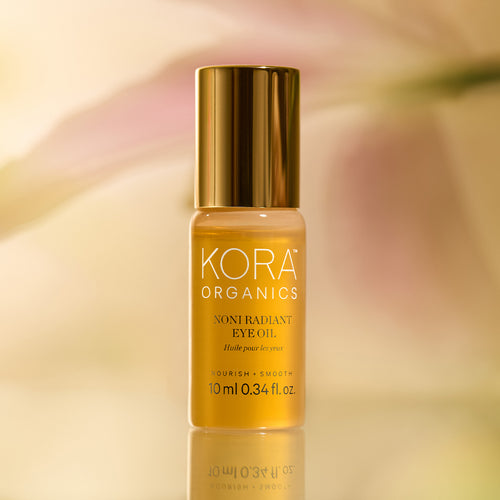
The Noni Radiant Eye Oil ($46.00) extends the same logic to the periorbital area, one of the most structurally delicate zones on the face. The skin around the eye is approximately 40% thinner than facial skin elsewhere, which means ingredient selection and delivery format matter significantly. An oil-based formula provides lipid replenishment without the occlusive heaviness that can cause milia in this area, and noni's antioxidant profile addresses the oxidative stress that contributes to dark circles and fine lines.
The Non-Negotiables
Every KORA Organics product is vegan, gluten-free, cruelty-free, and non-GMO. These are not add-on certifications adopted for market positioning. They are baseline requirements that the brand has held since its founding.
The cruelty-free commitment matters in a category where animal testing remains legal in certain major markets and where brands frequently carve out exceptions for regulatory compliance in those regions. KORA Organics does not operate on exceptions.
The vegan standard eliminates a wide category of commonly used skincare ingredients, including beeswax, lanolin, squalene derived from shark liver, and carmine. Formulating without these materials while maintaining efficacy requires more deliberate ingredient selection. The brand makes that investment.
What Holistic Actually Means Here
The word holistic gets used loosely in beauty. For KORA Organics, it describes a specific approach: that skincare is one part of a broader relationship with wellbeing, not a separate cosmetic concern. Miranda Kerr has spoken publicly about Ayurvedic practices, meditation, and nutritional choices as part of her personal health philosophy, and that perspective is embedded in how the brand thinks about its products.
This does not translate into vague wellness language on the packaging. It translates into formulations that prioritize skin health outcomes over short-term sensory payoff, into certifications that hold the brand accountable to external standards, and into a product development process that treats the skin as a system worth understanding rather than a surface worth covering.
That is what a brand built on conviction looks like in practice. Not a trend. A position held consistently, product after product, across every category in the line.