




(0) Items
Why Dry, Crepey Under-Eyes Need a Different Approach Entirely
Posted by KORA Organics in The-organic-editCrepey skin under the eyes is not the same problem as wrinkles, and treating it the same way rarely works. The fine, tissue-paper texture that develops in this area has a specific cause: a breakdown in the skin's ability to hold water combined with a loss of the structural proteins that keep skin plump and resilient. Understanding that distinction changes which products you reach for and why.
What Actually Creates That Crepey Texture
The skin beneath the eye is the thinnest on the face, averaging around 0.5mm thick compared to roughly 2mm elsewhere. It contains fewer sebaceous glands, which means it produces almost no natural oil to support the skin barrier. As collagen and elastin production slows with age, and as transepidermal water loss (TEWL) increases, the skin loses the internal scaffolding and surface moisture it needs to look smooth. The result is that characteristic crinkled, almost fragile appearance that deepens when the skin is dry.
Research published in the Journal of Investigative Dermatology has documented the progressive decline in skin hydration and barrier function with age, noting that the stratum corneum becomes less effective at retaining moisture over time. For the under-eye zone, this process is accelerated by environmental exposure, screen time, and insufficient hydration in topical products.
This is why most standard eye creams fall short. They address surface dryness without doing the deeper work of supporting barrier function, stimulating cellular renewal, or delivering lipid-rich nourishment that the skin in this area cannot produce on its own.
The Case for Oil as a Primary Treatment
Oil-based eye treatments are often dismissed as too heavy or too simple, but for crepey, dry skin, they are frequently the most effective category available. Here is why: crepey skin is lipid-deficient at the barrier level. Applying a water-based cream can temporarily plump the surface, but without lipids to seal that moisture in, it evaporates. Facial oils work by mimicking the skin's own barrier lipids, reducing TEWL and allowing hydration to accumulate beneath the surface rather than escape through it.

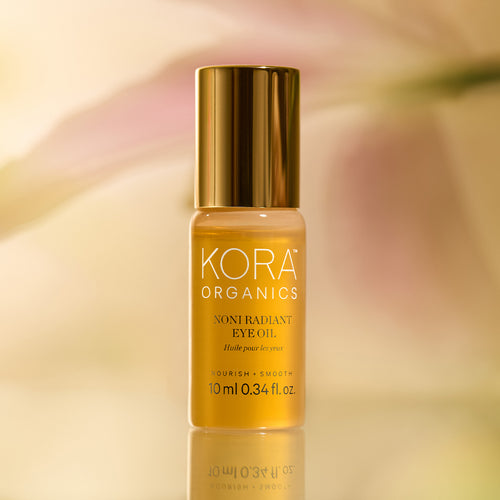
The Noni Radiant Eye Oil ($46) is formulated specifically for this mechanism. Noni fruit extract is rich in fatty acids and antioxidants that support barrier repair, while the lightweight oil base absorbs without leaving a film that would interfere with anything layered on top. Applied at night, it works alongside the skin's natural repair cycle, which peaks during sleep. For dry, crepey skin, this is not a finishing step, it is a treatment.
Vitamin C Addresses More Than Brightness
Vitamin C is frequently discussed in the context of dark circles and hyperpigmentation, but its role in crepey skin goes further. Vitamin C is a required cofactor in collagen synthesis. Without adequate vitamin C at the cellular level, the skin cannot produce the collagen fibers that give it structural integrity. Topical vitamin C has been shown in multiple peer-reviewed studies to stimulate procollagen production and improve skin elasticity when applied consistently over several weeks.

The Kakadu Plum Vitamin C Eye Cream ($64) draws on Kakadu plum, which holds one of the highest naturally occurring concentrations of vitamin C of any botanical source. The significance of using a whole-plant source rather than a synthetic ascorbic acid is stability: synthetic vitamin C oxidizes quickly and can become irritating, particularly around the sensitive eye area. The botanical format delivers vitamin C alongside co-occurring phytonutrients that support its activity. For crepey skin specifically, the cream format adds a layer of occlusion that helps lock moisture into the under-eye zone throughout the day.
Cellular Renewal Without the Irritation Problem
One of the most well-documented approaches to crepey skin is accelerating cellular turnover. As skin renewal slows, dead cells accumulate on the surface and the skin thickens unevenly, contributing to rough texture. Retinol is the most studied ingredient for this purpose, with decades of clinical data supporting its ability to increase cell turnover and stimulate collagen production. The problem for the under-eye area is that traditional retinol is frequently too irritating for skin that is already compromised and thin.

The Plant Stem Cell Retinol Alternative Serum ($80) addresses this directly. The formula combines bakuchiol, a plant-derived compound that has been shown in clinical studies to produce retinol-comparable improvements in fine lines and skin texture without the associated irritation, with alfalfa stem cell extract to support skin renewal at a structural level. In an independent consumer study, 80% of users described the serum as more effective than traditional retinol products they had used previously. Applied to the orbital bone area rather than directly on the lid, it brings renewal activity to the under-eye zone without the sensitivity risk.
Why Cleansing Matters More Than People Expect
Dry, crepey skin is barrier-compromised skin. Cleansing with anything that strips or disrupts the barrier further will undermine every treatment applied afterward. Surfactant-heavy cleansers remove not only makeup and debris but also the lipids that hold the barrier together, leaving skin more prone to TEWL and more reactive to active ingredients.

The Milky Mushroom Gentle Cleansing Oil ($48) uses silver ear mushroom, a polysaccharide-rich ingredient with a molecular structure that allows it to form a hydrating film on the skin surface while cleansing. In consumer testing, 100% of users reported that it removed impurities effectively without causing irritation. For dry, crepey skin, this distinction is not cosmetic, it determines whether the barrier remains intact enough to benefit from the treatments that follow.
Building a Routine That Actually Works
The logic of a routine for dry, crepey under-eyes follows a clear sequence: protect the barrier during cleansing, deliver cellular renewal through an active serum, layer a vitamin C eye cream for structural support and brightness, and seal everything with a lipid-rich eye oil at night. Each step serves a specific function that the others cannot replace.
The Plant Stem Cell Retinol Alternative Moisturizer ($72) works well as a supporting step for the broader face, reinforcing the same renewal signals from the serum across the full skin surface so that the under-eye area is not being treated in isolation.
Crepey skin under the eyes responds slowly, because the changes that created it accumulated over years. Consistent use of the right combination of ingredients, barrier-supporting lipids, vitamin C for collagen synthesis, a gentle retinol alternative for renewal, and a cleanser that does not undo the work, produces visible improvement over weeks, not days. The mechanism is sound. The ingredients exist. The routine just has to be built correctly.