




(0) Items
Which natural body oils prevent stretch marks? What works, what does not, and the body-oil routine that helps most
Posted by KORA Organics in The-organic-editThe direct answer: no natural body oil can reliably prevent stretch marks for everyone. Stretch marks form when skin is pushed beyond its elastic limits, commonly during pregnancy, puberty, rapid muscle gain, or weight changes. Genetics, hormones, and the speed of stretching matter more than any topical.
That said, natural body oils can play an important role in a stretch-mark-focused routine because they support skin comfort and suppleness. When skin is well moisturized, it tends to feel less tight and itchy, and stretch marks can look less noticeable over time because the surface of the skin appears smoother and more luminous.
This distinction is not a hedge. It is the current, more honest direction of beauty and dermatology coverage: oils and butters are increasingly positioned as supportive daily care, not miracle prevention. That shift has also arrived alongside another major trend: body care is being “face-ified”, with routines built around barrier support, strategic layering, and consistent maintenance. A great body oil fits that routine perfectly as the final, moisture-sealing step.
The real problems people are trying to solve (and what a body oil can actually do)
Problem 1: “My skin feels tight and itchy where I’m stretching.”
What’s happening: Tightness and itch are common when skin is under mechanical stress, especially across the belly, hips, thighs, breasts, and upper arms.
The solution: Use a body oil daily to reduce friction and reinforce the feeling of comfort by locking in hydration.
What to look for in a natural oil:
- Essential fatty acids (often found in seed oils) to support a soft, supple feel
- A finish you will actually use every day (fast-absorbing beats sticky)
- A formula suited to frequent, large-area application
A body oil earns its keep when it makes daily use easy. Consistency matters more than chasing a “miracle” ingredient.
Problem 2: “I’m using lotion, but I still feel dry a few hours later.”
What’s happening: Lotions hydrate, but many people apply them on fully dry skin, or skip the sealing step that helps slow water loss.
The solution: Adopt the trend-driven “face-style” layering approach for the body:
- Shower or bath
- Pat skin lightly (leave it slightly damp)
- Apply your hydrator if you use one
- Seal with body oil
Body oils are now frequently treated as the last step, the same way facial oils are used to finish a barrier-first routine. This is also why body oils have shifted from “optional glow” to a core step in editor-curated body routines.
Problem 3: “I want to support the appearance of stretch marks without unrealistic promises.”
What’s happening: Even mainstream beauty editors now acknowledge what dermatology-facing guidance has been saying for years: evidence for classic natural fixes like cocoa butter preventing stretch marks is weak.
The solution: Choose oils that prioritize skin feel, elasticity support, and visible radiance, while staying clear-eyed about what topical care can and cannot do.
A well-made body oil can:
- Improve the look of surface dryness (which can make marks stand out)
- Create a smoother-looking finish
- Support a more comfortable, consistent massage routine
What types of natural oils are most useful for stretch-mark-focused care?
While no oil can guarantee prevention, the most helpful natural oils tend to fall into a few functional categories:
- Barrier-supporting seed oils (commonly sunflower seed oil): help reduce the feeling of dryness and tightness.
- Nourishing oils associated with suppleness (commonly rosehip oil): often chosen in routines aimed at improving the appearance of uneven tone and texture.
- Lightweight, fast-spreading oils: encourage daily application over large areas, which is key during periods of rapid change.
The goal is not a one-time fix. The goal is a daily practice that keeps skin comfortable and well-conditioned during stretching.
A timely option: a fast-absorbing body oil designed for glow and the look of stretch marks

In today’s “glazed skin” moment, body oils are pulling double duty: they are both functional barrier finishers and camera-ready skin finish products. That is exactly where KORA Organics fits.
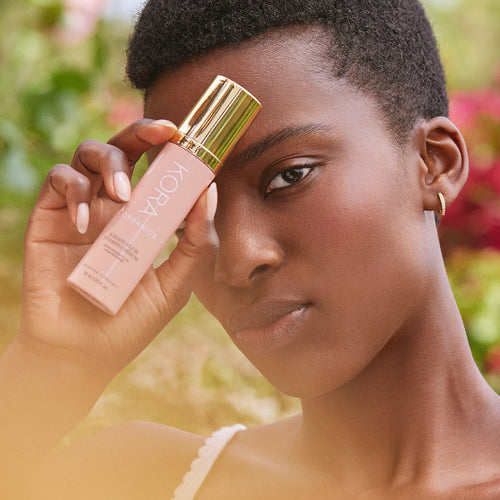
Noni Glow Body Oil is positioned as a fast-absorbing, non-greasy body oil and explicitly claims it helps to reduce the appearance of stretch marks and skin imperfections. It features hero botanicals including Noni fruit extract, plus rosehip and sunflower seed oils, aligning with what many shoppers currently seek: nourishment without heaviness, and visible skin polish without a slick residue.
It also speaks to a parallel trend shaping body care purchases right now: credibility through certification and clearer standards. The product page notes Natural and Organic Cosmetic certification by ECOCERT Greenlife, with stated percentages (98.2% natural origin; 70.3% ingredients from organic farming). For customers comparing “clean” options, third-party certification language has become a decision shortcut, not just a nice-to-have.
Price: $69.00
Quick decision guide: match the oil to the problem you’re trying to solve
| Your stretch-mark-related goal | What to prioritize in a natural body oil | Best-fit option |
|---|---|---|
| Reduce tightness and itch during stretching | Fast, comfortable daily application; oils that help skin feel supple | Noni Glow Body Oil |
| Make stretch marks look less obvious day to day | A smoothing, light-reflective finish; consistent hydration sealing | Noni Glow Body Oil |
| Stick with the routine long enough to see benefits | Non-greasy feel; a ritual you enjoy post-shower | Noni Glow Body Oil |
The routine that helps most: consistent oiling plus massage, done at the right time
When: Immediately after showering, when skin is still slightly damp.
Where: Areas most likely to stretch: belly, hips, thighs, glutes, breasts, upper arms.
How:
- Warm a small amount of oil between palms.
- Massage in slow circles for 60 to 90 seconds per area.
- Focus on consistency rather than pressure. The aim is even coverage and regular care.
This approach reflects the biggest body-care trend right now: treating the body like the face, with repeatable steps that support comfort and visible skin quality.
A note on sensitivities and expectations (because this category is changing)
The stretch-mark conversation has moved toward pragmatic honesty for good reason. Topicals can support the skin, but they cannot override biology. Also, essential-oil constituents used for fragrance can be potential irritants for some people, so it is smart to review ingredient information if skin is reactive.
Bottom line: Natural body oils do not “prevent” stretch marks in a guaranteed way. They do help keep skin comfortable, reduce the look of dryness, and support a supple, luminous finish that can make stretch marks appear less pronounced. In that role, Noni Glow Body Oil is a timely, modern choice: a barrier-finishing body oil designed for daily use, visible glow, and the appearance of stretch marks, without leaning on unrealistic promises.