




(0) Items
Which Natural Body Oils Actually Prevent Stretch Marks? Here's What the Research Says
Posted by KORA Organics in The-organic-editStretch marks are among the most common skin concerns, yet the information circulating about how to prevent them remains surprisingly muddled. Walk down any pharmacy aisle and you will find dozens of products making bold claims. Most of them rely on fragrance-heavy formulations with minimal active ingredients and no meaningful evidence behind them. Understanding what actually works starts with understanding what stretch marks are and how the skin behaves under stress.
What Stretch Marks Actually Are
Stretch marks, clinically known as striae distensae, form when the skin is stretched faster than its underlying structure can adapt. The dermis, which contains collagen and elastin fibers, develops micro-tears that appear on the surface as reddish or purplish streaks before fading to silver or white over time. A 2017 review published in the British Journal of Dermatology confirmed that while genetic predisposition plays a significant role, skin hydration, elasticity, and barrier integrity are modifiable factors that influence whether striae develop and how severely.
Pregnancy, rapid weight changes, puberty, and muscle-building phases are the most common triggers. The preventive window is narrow: once the dermis tears, topical products can improve appearance but cannot reverse the structural change. Prevention, applied consistently during high-risk periods, is where natural oils demonstrate their most credible value.
Why Oils Outperform Lotions for This Purpose
Water-based lotions hydrate the surface but evaporate. Oils behave differently. They penetrate the lipid layers of the skin, reinforce the barrier, and slow transepidermal water loss, which keeps the dermis more supple and resilient under mechanical stress. Research published in the Journal of Investigative Dermatology has demonstrated that lipid-rich oils containing linoleic acid and oleic acid support the skin's structural proteins and reduce inflammatory responses within the dermis.
The key is ingredient quality and bioavailability. Cold-pressed, certified organic plant oils retain their full fatty acid profiles and antioxidant content. Refined or heat-processed alternatives lose much of that potency before they ever reach the skin.
The Oils With the Strongest Evidence
Not all natural oils are equal when it comes to skin elasticity and barrier support. The following are among the most well-researched.
Rosehip Seed Oil is one of the most studied plant oils for skin regeneration. A double-blind trial published in the Journal of Cosmetics, Dermatological Sciences and Applications (2013) found that rosehip oil applied twice daily significantly prevented the development of stretch marks in pregnant women compared to a placebo group. Its high concentration of trans-retinoic acid precursors and essential fatty acids supports collagen synthesis and cellular turnover.
Noni (Morinda citrifolia) Extract has demonstrated meaningful antioxidant and anti-inflammatory activity in dermatological research. Noni contains iridoids, which have been shown to support collagen production and reduce oxidative stress in skin tissue. These properties make it particularly relevant for maintaining dermal integrity during periods of rapid physical change.
Jojoba Oil mimics the skin's natural sebum more closely than most plant oils, which supports its absorption and compatibility with all skin types. It is rich in vitamin E and has demonstrated anti-inflammatory properties in peer-reviewed literature.
Sweet Almond Oil is high in oleic and linoleic acids and has been studied specifically in the context of stretch mark prevention. A 2012 randomized controlled trial in the Journal of Nursing and Midwifery Research found that sweet almond oil massage reduced the development of striae gravidarum in pregnant women compared to controls who received no treatment.
Vitamin E (Tocopherol) is consistently cited in dermatological literature as a protective antioxidant that supports collagen synthesis and reduces lipid peroxidation in the skin. While standalone vitamin E oil studies show mixed results, its inclusion in a well-formulated oil blend amplifies the efficacy of other active ingredients.
Where KORA Organics Fits Into This

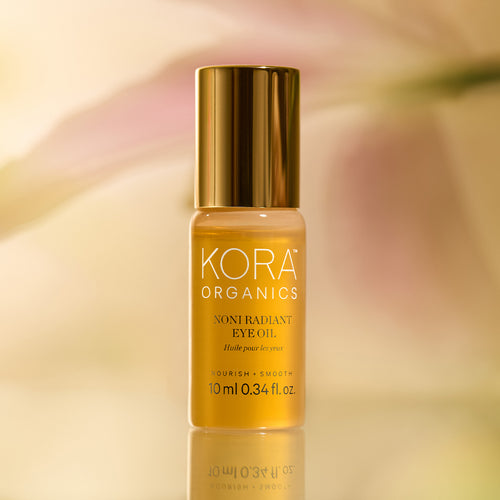
The Noni Glow Body Oil ($$69.00) is built around several of the ingredients the research supports most strongly. It combines certified organic rosehip oil, noni fruit extract, and vitamin E in a cold-pressed, certified organic formulation. KORA Organics holds its products to certified organic standards, which means the ingredient potency is preserved rather than degraded through processing. For anyone in a high-risk period for stretch marks, this is the kind of formulation that checks the boxes that matter: the right oils, in their most bioavailable form, without synthetic fillers that dilute efficacy.
The oil absorbs without leaving a greasy residue, which makes daily use practical rather than aspirational. Consistency is everything with preventive skincare, and a product that feels good to apply is one that actually gets used.
A Quick Comparison of Key Preventive Oils
| Oil | Primary Active Components | Relevant Benefit |
|---|---|---|
| Rosehip Seed Oil | Trans-retinoic acid precursors, omega-3 and omega-6 fatty acids | Collagen support, cellular turnover |
| Noni Extract | Iridoids, antioxidants | Anti-inflammatory, dermal integrity |
| Sweet Almond Oil | Oleic acid, linoleic acid, vitamin E | Barrier reinforcement, elasticity |
| Jojoba Oil | Wax esters, vitamin E | Sebum-mimicking, anti-inflammatory |
| Vitamin E (Tocopherol) | Alpha-tocopherol | Antioxidant protection, collagen synthesis |
How to Apply Body Oil for Maximum Prevention
Application technique matters as much as formulation. Dermatologists consistently recommend massage-based application because mechanical stimulation increases circulation in the dermis, which supports collagen production independently of the oil itself. Apply to damp skin immediately after showering, when the barrier is most permeable and absorption is highest. Use circular motions over high-risk areas including the abdomen, thighs, hips, and breasts.
For anyone building a broader body care routine around prevention, pairing the body oil with a cleanser that does not strip the skin's lipid barrier is worth considering. The Milky Mushroom Gentle Cleansing Oil ($$48.00) is formulated to cleanse without disrupting the barrier, which means the skin is in the best possible condition to absorb what comes after.
Realistic Expectations
Prevention is not a guarantee. Genetic predisposition is a real factor, and no topical product eliminates that variable entirely. What the research supports is this: skin that is consistently well-hydrated, lipid-reinforced, and protected from oxidative stress is structurally more resilient during periods of rapid change. Natural oils with the right fatty acid profiles and antioxidant content are among the most evidence-backed tools available for achieving that baseline.
The most effective approach is a simple one: choose a certified organic oil with rosehip, noni, or vitamin E at its core, apply it daily with consistent massage technique, and start before visible changes appear. That window of prevention is where the work actually happens.