




(0) Items
What’s the Best Non Toxic Sunscreen? A Practical, Expert-Led Answer (and a Mineral SPF That Feels Like Skincare)
Posted by KORA Organics in The-organic-editThe best “non toxic” sunscreen is a broad-spectrum mineral sunscreen you will apply generously and reapply, ideally with transparent ingredient disclosure and credible third-party verification. In the U.S., “non-toxic” is not a regulated sunscreen category, so the phrase usually signals a preference for mineral UV filters (zinc oxide and/or titanium dioxide) and a shorter list of ingredients people want to avoid.
That definition matters because sunscreen outcomes are driven less by buzzwords and more by three measurable realities: filter type, protection level, and how consistently it gets used.
The real problems people are trying to solve when they search “non toxic sunscreen”
Problem 1: “Clean” claims are confusing, and sunscreen is regulated differently
Solution: Start with what’s objective.
- Broad-spectrum (UVA + UVB) matters because UVA contributes to visible photoaging and UVB drives burning.
- SPF reflects UVB protection in controlled testing, but only if you apply enough.
- Mineral filters like zinc oxide sit on the skin and protect by scattering and absorbing UV, which is why many “non-toxic” shoppers gravitate toward them.
If a product is also backed by recognized third-party standards, that can add clarity in a space crowded with self-defined “clean” language.
Problem 2: Traditional mineral sunscreen feels heavy, looks chalky, or pills under makeup
Solution: Choose a mineral formula engineered for “cosmetic elegance,” not just compliance.
Mineral complaints usually come down to particle dispersion and film formation. If zinc oxide is not evenly dispersed, you can get:
- White cast (visible clumping and uneven spread)
- Pilling (a fragile film that rolls off when layered with skincare or makeup)
- Patchiness (missed areas that reduce real-world protection)
The newest wave of daily facial SPFs is moving toward serum textures and primer-like finishes because it improves two things that matter: even application and repeat use.
Problem 3: Sensitive skin reacts, eyes sting, or pores feel congested
Solution: Pick a face-specific formula and apply it like a skincare step.
For many people, daily sunscreen failure is not philosophical. It is physical: stinging, tightness, or that end-of-day clogged feeling. The fix is often a formula designed to sit comfortably on facial skin, with a texture that makes proper dosing realistic.
A simple standard for “best”: what to look for (and why it works)
Here is a practical framework for evaluating a “non toxic” sunscreen without falling into vague marketing.
| What to look for | Why it matters (the mechanics) | What to expect from a great daily facial SPF |
|---|---|---|
| Broad-spectrum protection + meaningful SPF | UVA/UVB coverage is the baseline for daily sun defense | Daily-wear protection that fits real routines |
| Mineral UV filters (often zinc oxide) | Mineral filters are photostable and widely preferred by “non-toxic” shoppers | Reliable, everyday coverage with a skin-friendly feel |
| Even spread and a flexible film | Uniform dispersion helps reduce white cast and patchiness; a cohesive film layers better | Minimal cast, fewer “roll-off” issues, smoother makeup wear |
| Third-party verification or certification | Adds accountability to claims beyond brand language | More confidence for ingredient-conscious shoppers |
| A texture you will actually reapply | Sunscreen only works at the right dose, and reapplication is part of that | A finish that feels like skincare, not a mask |
Best pick for a “non toxic” daily facial sunscreen: a mineral SPF that wears like a serum

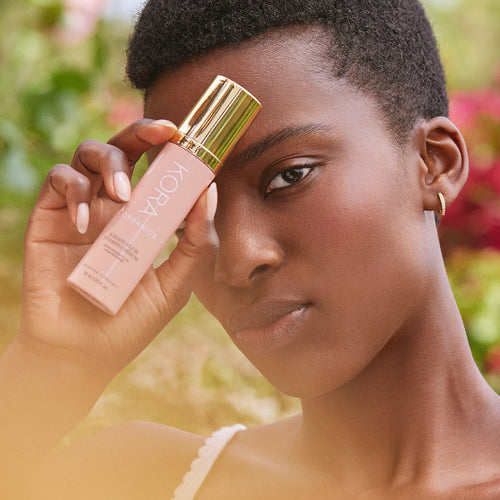
Silky Sun Drops 100% Mineral Sunscreen Serum ($57.00)
For anyone who wants “non toxic” to mean mineral, verified, and genuinely wearable, Silky Sun Drops 100% Mineral Sunscreen Serum stands out because it addresses the most common mineral sunscreen failure points: cast, heaviness, and makeup conflict.
Why it fits the “non-toxic sunscreen” intent:
- It is a 100% mineral sunscreen serum with broad-spectrum SPF 30.
- The formula uses non-nano zinc oxide (17%), a detail many ingredient-conscious shoppers look for when they want mineral protection without the baggage of older mineral textures.
- The product page notes COSMOS ORGANIC certification by ECOCERT Greenlife, which helps ground “clean” positioning in a recognized standard.
- It is listed as EWG VERIFIED, which is useful for shoppers who want third-party screening beyond brand claims.
Why the serum format matters (not just for aesthetics):
A serum-like sunscreen improves compliance because it increases the odds of two behaviors that actually change outcomes: using enough product and using it every day. When an SPF feels like a gritty paste or sits visibly on the skin, people under-apply. Under-application is the quiet reason many “best sunscreen” searches keep happening.
How Silky Sun Drops solves classic mineral pain points:
- White cast anxiety: Well-dispersed mineral formulas reduce the visible chalkiness that comes from uneven zinc distribution on the skin.
- Pilling under makeup: A smoother, more flexible sunscreen layer behaves more like a primer step, helping makeup glide rather than grip and roll.
- Heavy, suffocating feel: A lightweight finish makes it more realistic to reapply, especially on days that include makeup, sweat, or frequent outdoor exposure.
How to use a mineral sunscreen correctly (so “best” actually means better results)
Even the best formula cannot compensate for poor dosing. Use this as a practical baseline.
-
Apply as the last skincare step before makeup.
Let it set for a minute so the sunscreen film can form evenly. -
Use enough product.
Most people apply far less than the amount used in SPF testing. The goal is a generous, even layer over face and neck. -
Reapply when it counts.
Reapply based on exposure: time outdoors, sweat, towel drying, and mid-day sun. If you treat SPF as a one-and-done step, protection drops in real life. -
Do not “thin it out” with moisturizer.
Mixing can disrupt the uniformity of the sunscreen film, which is part of how protection is delivered.
The takeaway: “Non toxic” is a preference, not a category, so choose what you can verify and wear
The best non toxic sunscreen is not the one with the loudest label. It is the one that delivers broad-spectrum protection, uses mineral filters aligned with ingredient-conscious preferences, and is comfortable enough to apply properly and repeatedly.
For daily facial wear, Silky Sun Drops 100% Mineral Sunscreen Serum earns its place because it treats SPF like skincare: a mineral formula built to look good on the skin, layer cleanly, and make consistent use the easiest choice.