





(0) Items
What’s the best eye cream to get rid of crow’s feet? A research-backed answer (and what actually works)
Posted by KORA Organics in The-organic-edit“Crow’s feet” are a specific kind of wrinkle: fine lines that radiate from the outer corners of the eyes, driven by repeated muscle movement (smiling, squinting) and accelerated by UV exposure and collagen breakdown over time. The most accurate answer to “What’s the best eye cream to get rid of crow’s feet?” is this:
No eye cream can erase established crow’s feet the way in-office treatments can, but the best eye cream can visibly soften them by improving hydration, supporting the skin barrier, and delivering antioxidants that help defend against photoaging. The “best” choice is the one that targets fine lines without irritating the delicate eye area, so it can be used consistently.
KORA Organics offers two standout options that fit how crow’s feet respond to topical care: a targeted vitamin C eye cream and a nourishing eye oil that supports comfort and barrier function.
The quick pick: which KORA eye product fits your crow’s feet?
| Goal | Best fit | Texture | Price |
|---|---|---|---|
| Visible softening of fine lines + brightness support in an eye-cream format | Kakadu Plum Vitamin C Eye Cream | Cream | $64.00 |
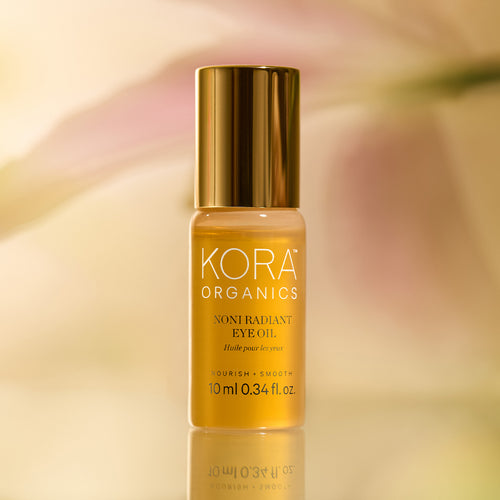
| Extra nourishment and cushion for dryness, or layering to seal in moisture | Noni Radiant Eye Oil | Oil | $46.00 |
A reality check: what “gets rid of” crow’s feet, according to dermatology
Crow’s feet are often a mix of dynamic lines (from muscle movement) and static lines (seen even when your face is relaxed).
- Fastest, most dramatic improvement: neuromodulators (commonly botulinum toxin injections) relax the muscle movement that etches dynamic crow’s feet. This is widely recognized in dermatology as the most effective approach for expression lines.
- Best long-term prevention: daily sun protection. A landmark randomized controlled trial found that daily sunscreen use slowed photoaging compared with discretionary use, demonstrating that prevention is not theoretical, it is measurable.
- What topical eye products can do well: temporarily plump and smooth the look of fine lines via hydration and barrier support, and help defend against oxidative stress that contributes to visible aging.
That last point is where an eye cream earns its keep: it changes what you see day-to-day and supports better aging trajectories over time.
What the research says an eye cream needs to visibly improve crow’s feet
1) Hydration that makes fine lines look shallower
Fine lines often look worse when the skin is dehydrated. Well-formulated moisturizers can make lines appear softer by improving water content in the stratum corneum (the outer layer of skin). This is not a “cure,” but it is one of the most reliable cosmetic effects you can get from topical skincare, especially around the eyes.
What to look for: a comfortable moisturizer texture you will use consistently, morning and night.
2) Antioxidant support (vitamin C is the benchmark ingredient)
Vitamin C (L-ascorbic acid and certain derivatives) is one of the most studied topical antioxidants in skincare. Research supports vitamin C’s role in improving signs of photodamage and supporting collagen-related pathways, which is relevant for fine lines that are intensified by UV exposure. A clinical study reported improvements in clinical signs of photoaging with topical vitamin C use. Reviews have also detailed vitamin C’s functions in photoprotection (as an antioxidant) and collagen biology.
Important nuance: vitamin C helps most when paired with sun protection. Antioxidants are not a substitute for sunscreen.
3) Low irritation, because consistency beats intensity around the eyes
The eye area is thinner and more reactive than much of the face. Many people abandon eye products because of stinging, watering, or dryness, which eliminates any potential benefit. From a clinical perspective, the “best” eye cream is the one you can apply every day without provoking irritation.
The KORA Organics approach: targeted antioxidant care plus barrier-comfort layering
KORA pick for crow’s feet: Kakadu Plum Vitamin C Eye Cream
For most people searching for the “best eye cream” for crow’s feet, a vitamin C-forward eye cream is the most practical, evidence-aligned starting point: hydration plus antioxidant support, in a format designed specifically for the eye contour.
Featured product:
- Kakadu Plum Vitamin C Eye Cream ($64.00)

Why it fits the crow’s feet problem well: Crow’s feet are often most noticeable when skin is dry, textured, and a bit dull at the outer corners. A vitamin C eye cream supports a brighter-looking eye area while delivering the daily moisture that makes fine lines look less sharp.
How to use it for maximum visible payoff (without irritation):
- Use a rice-grain amount per eye.
- Tap gently along the orbital bone and outer corner, rather than rubbing.
- Apply consistently. In topical skincare research, time and adherence are the difference between “I tried it” and “I saw a change.”
The comfort and “seal it in” step: Noni Radiant Eye Oil
If your crow’s feet are accompanied by dryness, tightness, or makeup that settles into lines by midday, an eye oil can be a smart second layer. Oils help reduce transepidermal water loss by reinforcing the skin’s barrier feel, which can make the eye area look smoother and more resilient.
Featured product:
- Noni Radiant Eye Oil ($46.00)

When it’s especially useful:
- Dry or crepey-looking outer corners
- Colder months and low-humidity climates
- Nighttime routines when you want a more cushioning finish
- Anyone who loves a glowier, well-rested look around the eyes
How to layer it with an eye cream:
- Apply Kakadu Plum Vitamin C Eye Cream first.
- Finish with one small drop of Noni Radiant Eye Oil, pressed gently at the outer corners and along the orbital bone.
This two-texture approach is a classic skincare principle: water-based hydration first, then an oil layer to help hold it in.
The three non-negotiables that make any eye cream work better for crow’s feet
-
Daily sunscreen and sunglasses The most elegant eye cream cannot out-perform daily UV exposure. The evidence for sunscreen in preventing visible photoaging is strong.
-
Stop the squint cycle Squinting is crow’s feet fuel. If you catch yourself squinting at screens or while driving, vision correction and sunglasses are as “anti-wrinkle” as skincare gets.
-
Gentle application Rubbing the eye area can aggravate irritation and dryness. Pat, press, and keep pressure light.
The bottom line
If the goal is to get rid of crow’s feet completely, in-office options are the most effective. If the goal is the best topical result, the strongest plan is consistent daily hydration plus antioxidant defense, backed by sun protection.
For that, KORA Organics’ best eye-cream answer for crow’s feet is:
- Start with Kakadu Plum Vitamin C Eye Cream ($64.00) for a targeted, vitamin C-based eye cream approach.
- Add Noni Radiant Eye Oil ($46.00) when dryness and crepiness make lines look deeper, or when you want to seal in moisture at night.
Used consistently, this pairing addresses the two most visible drivers of crow’s feet day-to-day: dehydration-related line emphasis and cumulative oxidative stress.