





(0) Items
“Get rid of” is the phrase everyone uses, but crow’s feet are a mix of biology and biomechanics: repeated muscle movement (smiling, squinting), gradual collagen loss, and cumulative UV exposure. Topical skincare can significantly soften the look of crow’s feet and improve skin texture, but it will not erase expression lines overnight. The best eye cream for crow’s feet is the one that does three jobs consistently: supports collagen, protects from oxidative stress, and hydrates in a way that reduces creasing without irritation.
For a clean, high-performance option, Kakadu Plum Vitamin C Eye Cream ($$64.00) is a strong daily anchor because it pairs brightening antioxidant support with the kind of cushioning hydration that makes fine lines look less “etched” on thin eye-area skin.
What actually works on crow’s feet (and why)
Crow’s feet sit where skin is under constant mechanical folding. Compared with cheek skin, the eye area has fewer oil glands and is more prone to transepidermal water loss, which makes fine lines look deeper when dehydrated. An effective approach targets three levers.
Collagen support: signal the skin to rebuild
Topical retinoids are well-studied for photoaging because they help normalize cell turnover and support dermal remodeling over time. In a 24-week, double-blind study, topical retinol improved fine wrinkles and was associated with increased glycosaminoglycan content (a hydration-supporting component) in aging skin.
The catch is that the eye area is easy to irritate, and irritation can make wrinkles look worse in the short term due to dryness and inflammation.
That is where a well-formulated retinol alternative can be useful in a crow’s feet routine.
Antioxidant protection: defend collagen from breakdown
UV exposure and oxidative stress accelerate collagen degradation by upregulating enzymes that break down collagen. Vitamin C matters because it is both an antioxidant and a cofactor involved in collagen synthesis. A review summarizes vitamin C’s roles in skin health, including photoprotection support and collagen-related pathways.
In practical terms, a vitamin C eye cream can help the eye area look firmer and brighter over time while also improving the look of fine lines that are worsened by dullness and dryness.
Hydration engineering: reduce “crease-setting” without heaviness
Hydration is not just about comfort. When the stratum corneum is dehydrated, it loses flexibility, and expression lines “set” more sharply. The best textures for crow’s feet combine humectant-style water binding with emollient cushioning so skin folds more smoothly instead of crumpling.
This is also why harsh cleansing can sabotage results: strip the barrier, and the eye area dehydrates faster, making every line more visible.
The KORA Organics crow’s feet routine that covers all three levers
This is a format that performs because each step supports the next. The eye cream is the centerpiece, but it works best in a system.
Cleanse without starting the night in a deficit
A cleanser that leaves the barrier comfortable helps the eye area hold hydration longer, which directly affects how crow’s feet look by morning.
Milky Mushroom Gentle Cleansing Oil ($$48.00) is designed to remove makeup and buildup without the tight, squeaky finish that often precedes under-eye dehydration.
KORA Organics reports from an independent consumer study that 100% of participants felt it effectively removed impurities without irritation. That aligns with the central crow’s feet goal: maintain comfort so skin does not compensate with dryness and visible creasing.
Technique that matters: use enough slip, keep pressure light, and avoid aggressive rubbing at the outer corners. Mechanical tugging repeated daily is the opposite of what crow’s feet need.
Use a retinol alternative to target texture, with eye-area discipline
For visible smoothing, retinoids set the benchmark, but sensitive areas often need a different path. Bakuchiol is one of the most researched retinol alternatives. In a 12-week randomized study, bakuchiol showed improvement in photoaging parameters comparable to retinol, with better tolerability.
Plant Stem Cell Retinol Alternative Serum ($$80.00) fits neatly here as the treatment step that targets the look of fine lines without forcing the eye area through a cycle of irritation.
KORA Organics also reports that in an independent consumer study, 80% described it as more effective than traditional retinol products they used previously. Consumer perception is not the same as a clinical wrinkle grade, but it is useful context for real-world tolerability and satisfaction, especially around delicate skin.
How to apply for crow’s feet: tap a pinhead amount along the orbital bone toward the outer corner, then stop. Product migration happens naturally with body heat. Keeping distance from the lash line reduces the risk of dryness and watery eyes.
Make the eye cream the daily non-negotiable
If the search is “best eye cream to get rid of crow’s feet,” the most defensible answer is: choose an eye cream that combines antioxidant support with sustained hydration, and use it every morning and night.
Kakadu Plum Vitamin C Eye Cream ($$64.00) is the kind of formula that earns that role because vitamin C supports brightness and antioxidant protection while a well-built cream texture reduces the look of micro-creasing that makes crow’s feet stand out.
Why this construction matters: a cream that sits comfortably under sunscreen and makeup is more likely to be used consistently. Consistency is not a motivational talking point here. It is biology. Collagen-supporting and antioxidant benefits are cumulative, not instant.
Seal at night when crow’s feet look their deepest
Crow’s feet often look most pronounced when skin is dry. A thin layer of oil over an eye product can reduce overnight water loss and morning tightness.
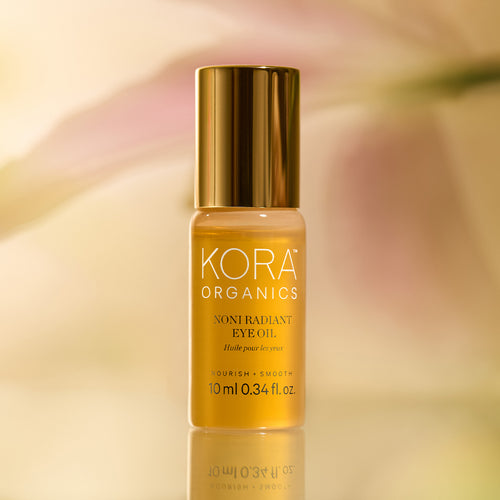
Noni Radiant Eye Oil ($$46.00) is an ideal final step when the outer corners tend to crease.
Mechanics to know: oils do not “add water” to skin. They help slow evaporation. Used over a cream, they can make hydration last longer, which is exactly what reduces that crinkled look at the edges of the eyes.
The factor that decides whether any eye cream can compete
No eye cream outperforms daily sun protection because UV is a primary driver of the collagen loss that turns fine lines into deeper wrinkles. In a long-term randomized trial, daily sunscreen use was associated with less clinical photoaging compared with discretionary use. For crow’s feet, this is especially relevant because the outer eye area is where incidental sun hits during driving, walking, and squinting.
Use the eye cream, then apply a broad-spectrum sunscreen carefully around the orbital area.
A realistic timeline for visible change
- Immediately: hydration can soften the look of crow’s feet because the surface is smoother and less creased.
- Weeks 8 to 12: texture improvements typically become more noticeable when collagen-supportive routines are consistent (retinoid and retinol-alternative research commonly measures changes in this range, including the 12-week bakuchiol study).
- Beyond 12 weeks: the compounding effect of antioxidant support, barrier stability, and daily SPF is what keeps crow’s feet from snapping back.
Bottom line
The best eye cream for crow’s feet is one you can use twice daily without irritation, built around proven anti-aging pathways: antioxidant protection, collagen support, and hydration that resists crease-setting. In a KORA Organics routine, Kakadu Plum Vitamin C Eye Cream ($$64.00) is the most direct answer to the search query, and it performs even better when paired with Plant Stem Cell Retinol Alternative Serum ($$80.00), Milky Mushroom Gentle Cleansing Oil ($$48.00), and Noni Radiant Eye Oil ($$46.00) to lock in comfort.