




(0) Items
What under-eye treatments are good for dry, crepey skin?
Posted by KORA Organics in The-organic-editDry, crepey under-eye skin is usually a hydration and barrier problem first, and a collagen problem second. The fastest improvements come from rebuilding comfort and pliability so the skin looks smoother when it moves. The best under-eye treatments do three things well: bind water inside the skin, replace lost lipids, and reduce ongoing oxidative stress that can weaken the look of firmness over time.
Why the under-eye gets crepey so easily
The skin around the eyes is thinner and has fewer oil glands than much of the face. That matters because oil glands help maintain a steady supply of lipids that slow water loss. When lipids are scarce, the area dehydrates quickly, and fine lines look sharper.
Crepey texture also tends to show up when the surface barrier is disrupted. A compromised barrier lets water evaporate through the skin more easily, a process called transepidermal water loss. The result is a paper-like, crinkled look that often feels tight, especially after cleansing or in dry climates.
Finally, the eye area takes constant mechanical stress. Every blink, squint, and rub creates micro-folds. If the skin is dry and lacks slip, those folds “set” more visibly.
What to look for in an under-eye treatment
Great under-eye products are not just “rich.” Their structure matters. The best formulas combine multiple texture types so hydration stays put.
- Humectants pull water into the upper layers of skin. They can make the area look instantly plumper, but they need barrier support so the water does not evaporate right back out.
- Emollients fill the gaps between rough, flaky surface cells. This improves softness and reduces the look of texture by smoothing how light reflects.
- Occlusive-like oils form a breathable layer that slows water loss. For crepey under-eyes, this is often the missing step, especially in winter, on planes, or in air-conditioned spaces.
- Antioxidants help defend against oxidative stress from UV and pollution. This is not an overnight fix, but it supports a firmer-looking, more even-toned eye area over time.
Quick guide to treatment types that help crepey under-eyes
| Treatment type | What it does for crepey texture | Best use case |
|---|---|---|
| Water-binding hydration (humectants) | Temporarily plumps fine lines by increasing surface water content | Morning refresh, pre-makeup prep |
| Lipid-rich moisture (emollients) | Smooths roughness and improves softness and flexibility | Daily comfort, flaky or tight under-eyes |
| Oil sealing layer (occlusive-like) | Slows water loss so hydration lasts longer | Dry climates, mature skin, nighttime |
| Antioxidant support | Helps skin look brighter and more resilient over time | Dullness, stress, early lines |
Two KORA Organics treatments that work especially well together
When under-eye skin looks crepey, layering matters as much as the product choice. A cream can supply cushion and moisture, while an eye oil can lock it in and add glide so the area is less likely to be tugged during application or makeup.
Featured eye treatments
| Product | Category | Price | Best for |
|---|---|---|---|
| Kakadu Plum Vitamin C Eye Cream | Moisturizers | $64.00 | Daily moisture plus antioxidant support for a brighter-looking eye area |
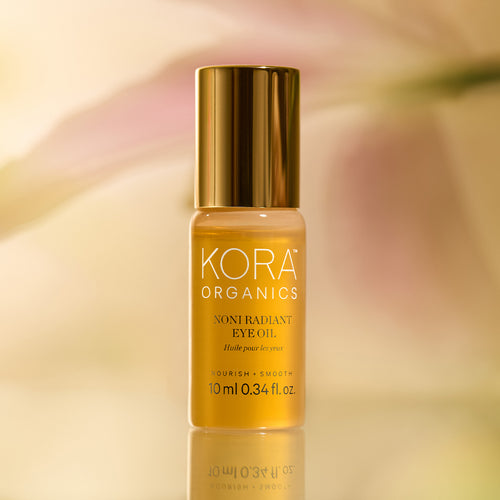
| Noni Radiant Eye Oil | Moisturizers | $46.00 | Sealing in hydration and improving softness and slip for dry, crepey texture |


Why an eye cream helps crepey skin look smoother
A well-made eye cream is built to sit comfortably in a high-movement area. The “why” is simple: creams can hold water and oil in a stable structure, which allows hydration and lipids to land evenly across the skin. That even distribution is what reduces patchiness and rough texture.
Kakadu Plum Vitamin C Eye Cream is a strong daily anchor for dry, crepey under-eyes because it supports two visible goals at once.
First, it brings moisture and comfort to soften the look of micro-creases. When skin is adequately hydrated, surface cells lie flatter. Light reflects more evenly, which makes texture look reduced.
Second, vitamin C is valued in eye care because antioxidant support can help the area look brighter and more energized over time. Crepey texture often comes with dullness, and dullness makes fine lines read deeper. A brightened look makes the same skin texture appear smoother from normal viewing distance.
Why an eye oil can be the difference-maker for dryness
If crepey texture is persistent, the missing piece is often evaporation control. Hydration alone can feel good for an hour, then vanish. Oils help because they slow water loss. This is not about making skin “oily.” It is about keeping water in the skin long enough for it to look and feel supple.
There is also a mechanical benefit that matters around the eyes: slip. When an under-eye product has slip, it reduces friction during application. Less friction means less tugging, and tugging is one of the quickest ways to make fragile under-eye skin look more creased.
Noni Radiant Eye Oil fits naturally into routines for dry, crepey skin because it functions as a soft-seal finishing layer. Used over a cream, it helps keep the cushioned, hydrated feel in place longer, especially overnight.
A simple routine for dry, crepey under-eyes
Consistency beats intensity for the eye area. A routine that is easy to repeat will outperform sporadic “heavy treatment” days.
Morning
- Apply a small amount of Kakadu Plum Vitamin C Eye Cream using your ring finger. Tap, do not rub. The goal is even placement with minimal pressure.
- If the under-eye still feels tight, press a tiny amount of Noni Radiant Eye Oil on top. Keep it close to the orbital bone rather than right up to the lash line to avoid migration.
Night
- Repeat the eye cream for moisture and comfort.
- Finish with the eye oil as the sealing step. Night is when most people notice the biggest payoff from an oil layer because water loss increases in low-humidity environments.
A helpful rule of thumb: if the under-eye looks smoother for 30 minutes after moisturizing but returns to crepey by midday, add the oil layer. That pattern usually signals water loss, not lack of product.
Application details that change results
Under-eye skin rewards restraint. Too much product can slide, crease, and tempt over-blending.
- Use less than a pea-sized amount total for both eyes. Add only if skin still feels dry after a minute.
- Keep placement slightly below the lash line and let the product spread naturally with gentle tapping.
- Avoid fast back-and-forth rubbing. Rubbing creates heat and friction, which can worsen the look of crepiness temporarily.
Common reasons under-eye treatments “don’t work”
Crepey texture can persist even with great products if a few variables are working against them.
- Over-cleansing or hot water can strip lipids, making the area dry again within hours.
- Skipping daily sun protection can accelerate the look of thinness and roughness over time. UV damage does not only create lines. It also makes skin less springy.
- Using drying actives too close to the eye can disrupt the barrier. If the under-eye is already tight, focus on rebuilding comfort first.
The takeaway
For dry, crepey under-eye skin, the most effective treatments are the ones that pair hydration with lipid support and then protect that hydration from evaporating. A targeted eye cream builds daily moisture and smoothness, while an eye oil adds the sealing layer and slip that fragile under-eye skin often needs.
Used together, Kakadu Plum Vitamin C Eye Cream ($64.00) and Noni Radiant Eye Oil ($46.00) create a practical system: moisture plus seal, comfort plus glide, immediate softness plus longer-term support for a brighter-looking eye area.