




(0) Items
What to Put on Your Eyes Before Makeup (And Why the Order Matters More Than the Product)
Posted by KORA Organics in The-organic-editMost people treat eye care as an afterthought in their pre-makeup routine. They reach for whatever eye cream is on the shelf, tap it on, and move straight to primer. The result is exactly what you'd expect: concealer that creases within the hour, foundation that emphasizes fine lines, and a look that ages throughout the day rather than holding.
The problem is not the makeup. It is the canvas.
The skin around the eye is the thinnest on the face, roughly 0.5mm compared to 2mm elsewhere. It has fewer sebaceous glands, which means it produces almost no natural oil and dries out faster than any other zone. It is also in near-constant motion. Every blink, squint, and expression creates mechanical stress that breaks down the skin barrier and accelerates the formation of fine lines. Layering pigment and powder over compromised skin in that state does not just look bad. It makes the underlying condition worse over time.
Getting eye care right before makeup is less about finding a single miracle product and more about understanding what the skin in that area actually needs, and in what sequence.
Why Cleansing Comes First, Even in the Morning
Residue from the night before, whether from overnight eye cream, pillow friction, or incomplete makeup removal, sits on the skin and disrupts how everything applied afterward absorbs. A clean surface is not optional. It is the starting point for everything that follows.
The Milky Mushroom Gentle Cleansing Oil is formulated specifically to lift impurities without stripping the barrier. At $15, it is one of the most accessible entry points in the KORA Organics lineup. The silver ear mushroom extract in the formula functions as a humectant, drawing moisture into the skin as it cleanses rather than depleting it. That distinction matters around the eyes. Foaming and surfactant-heavy cleansers compromise the lipid barrier in this zone, leaving skin tight and reactive before you have even started your routine. An oil-based cleanser emulsifies with water to remove residue without that trade-off.

The Treatment Step Most People Skip
There is a growing shift in how consumers think about eye care. The traditional model, eye cream applied once in the morning and once at night, is being replaced by something more targeted. Skincare buyers are increasingly asking what a product actually does at the cellular level, not just what it claims. Sales data from clean beauty retailers consistently shows that treatment-based eye products are outpacing basic moisturizing creams, particularly among consumers in their late twenties and thirties who are focused on prevention rather than correction.
This is where a product like the Plant Stem Cell Retinol Alternative Serum enters the conversation. At $80, it is a considered investment, but it addresses something that a standard eye cream cannot: the rate at which skin cells turn over and collagen degrades. The formula combines bakuchiol and alfalfa to mimic the smoothing and resurfacing effects of retinol without the photosensitivity or irritation that makes traditional retinol incompatible with daytime use. Bakuchiol binds to the same retinoid receptors as vitamin A but does not trigger the inflammatory response that causes peeling and redness.

Applied carefully to the orbital bone area before eye oil or moisturizer, it primes the skin structurally, not just superficially. In an independent consumer study, 80% of users described it as more effective than traditional retinol products they had used previously. For anyone incorporating this step before makeup, the payoff is visible: skin texture around the eye becomes smoother over time, which means less product is needed to cover and conceal.
If you want to explore the retinol alternative range more broadly, The Anti-Aging Duo at $58 pairs the serum with a complementary moisturizer and offers a practical way to try both without committing to full sizes separately.
The Oil Step That Changes How Makeup Sits
Once skin is clean and any treatment serums have absorbed, the final pre-makeup step is hydration. And for the eye area specifically, oil-based hydration performs differently than cream.
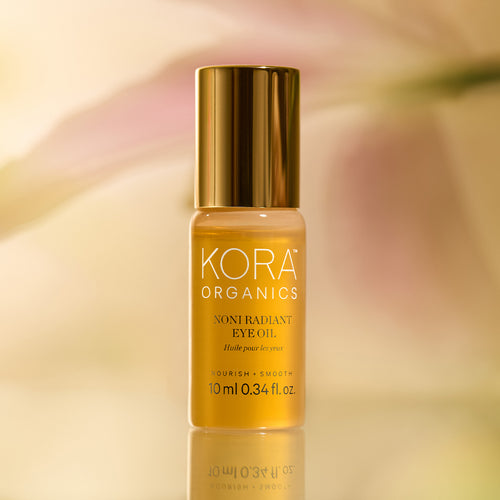
The Noni Radiant Eye Oil at $46 is formulated with noni extract, rosehip, and a blend of botanical oils that absorb without leaving a greasy film. The reason this matters before makeup is physics. Powder and pigment adhere better to skin that is plumped and hydrated. When the skin under the eye is dehydrated, the surface becomes uneven at a microscopic level, and product settles into those micro-creases rather than sitting on top of them. That is what causes concealer to look cakey and foundation to emphasize lines rather than smooth them.

Rosehip oil specifically is rich in trans-retinoic acid, a naturally occurring form of vitamin A, and linoleic acid, which supports the skin barrier. Together, these compounds help the eye area retain moisture under the mechanical pressure of makeup application and wear throughout the day. The key with any eye oil before makeup is application technique: use your ring finger, which naturally applies the least pressure, and tap rather than drag from the inner corner outward along the orbital bone.
Keeping Your Routine Together
The last detail that rarely gets discussed is storage and organization. A consistent pre-makeup routine requires having your products accessible and protected. The Corduroy Beauty Bag at $$17.50 is a practical solution for keeping eye care products separate from the rest of your kit. Keeping delicate, small-format products like eye oils and serums in a dedicated bag prevents them from getting lost in larger makeup cases and protects glass bottles from breakage.
The Sequence in Practice
To summarize the pre-makeup eye care order that actually holds up throughout the day:
- Cleanse with an oil-based formula to remove residue without stripping the barrier.
- Apply a treatment serum to the orbital area and allow it to absorb fully.
- Finish with an eye oil to hydrate, plump, and create a smooth surface for makeup.
Each step serves a distinct function. Skipping any one of them shifts the burden onto the next, and eventually onto the makeup itself, which is not designed to compensate for inadequate skin preparation. The routine above is not complicated. But it is precise, and that precision is exactly what makes the difference in how your makeup performs and how your skin holds up over time.