




(0) Items
When people say they want to “repair” their skin barrier, what they usually mean is that skin feels tight, stings with normally gentle products, looks flaky or inflamed, and seems to lose moisture quickly. A barrier-supportive mask can help, but only if it is doing the right kind of work: restoring water content in the stratum corneum (the outermost layer) and reducing transepidermal water loss (TEWL), the constant evaporation of water from skin.
Dermatology researchers have mapped this barrier in detail: corneocytes (the “bricks”) sit in a matrix of lipids (the “mortar”), primarily ceramides, cholesterol, and fatty acids. Work from investigators such as Peter Elias, MD, has been foundational in showing how disruptions to that lipid architecture drive irritation and dehydration. A good barrier mask supports that architecture indirectly by keeping water in the system and calming reactivity while skin rebuilds.
What a barrier-repair mask can realistically do
A mask will not permanently “fix” a barrier in one use. What it can do, when formulated well:
- Rapidly increase hydration so enzymes that organize barrier lipids function more normally. (Barrier biology is water-dependent.)
- Reduce TEWL by forming a temporary occlusive or semi-occlusive film that limits evaporation.
- Decrease the “reactive loop” where dryness leads to inflammation, which then further weakens barrier function.
The American Academy of Dermatology (AAD) consistently emphasizes a similar logic in barrier-compromised routines: reduce irritants, simplify steps, and focus on moisturization and gentle care. Masks can be a useful, time-limited intensifier of that strategy.
The mask types that best support a compromised barrier
Not all masks are barrier masks. Many popular formulas are designed to tingle, peel, or deep-clean, which can be the opposite of what stressed skin needs. The most supportive categories tend to fall into three buckets.
Hydrating cream masks that “seal and soak”
These are typically the most barrier-friendly format for irritated, dehydrated skin.
Why they work: A well-built cream mask layers humectants (water-binding ingredients like glycerin) with emollients (skin-smoothing oils and lipids) and occlusives (ingredients that slow evaporation). The humectants pull water into the upper layers; the occlusive layer reduces the rate at which that water escapes. This directly targets TEWL, one of the most measurable features of barrier impairment.
Who they suit: Tightness, flaking, post-sun dryness, over-exfoliation, winter skin, and anyone who experiences stinging when applying actives.
Colloidal oatmeal and “comfort” masks for reactive skin
If stinging and redness are prominent, comfort-first masks can be more useful than “active” masks.
Why they work: Colloidal oatmeal is recognized for skin protectant properties and is widely used in dermatology-adjacent care for compromised skin feel. The point is not exfoliation or brightening; it is calming the sensation of reactivity while supporting hydration so the barrier can normalize.
Who they suit: Itchy-feeling dryness, sensitivity flares, and skin that reacts to fragrance, acids, or retinoids.
Overnight sleeping masks that reduce evaporation during peak water loss
Nighttime can be when skin loses water most noticeably, especially in dry indoor environments.
Why they work: Occlusion matters. A sleeping mask can function like a breathable “top coat” that reduces nighttime TEWL. This is not glamorous science, but it is real: lowering evaporation helps skin retain the water it needs to maintain flexibility and comfort.
Who they suit: Chronically dehydrated skin, travel, cold climates, and anyone who wakes up feeling tight and parched.
What to look for on the label (and what to avoid)
Barrier repair is less about one hero ingredient and more about the mechanics of the formula.
Look for this structure
- Humectants to increase water content (commonly glycerin, hyaluronic acid, and similar water-binding ingredients).
- Emollients to soften and smooth rough texture (plant oils, fatty alcohols, and lipids).
- Occlusives or film-formers to reduce TEWL (varies by brand and texture; the goal is a comfortable, not suffocating, seal).
In barrier science, ceramides, cholesterol, and fatty acids are often discussed as the ideal “mortar” trio because they reflect the skin’s own lipid balance. Even when a mask is not explicitly a ceramide product, a formula designed around hydration plus evaporation control still supports the same barrier outcome: less water loss and better comfort.
Avoid these when your barrier is compromised
- High-level exfoliating acids or frequent peel masks (they can increase sensitivity when the barrier is already strained).
- Strong clay masks used repeatedly (effective for oil, but often dehydrating if you are already dry or irritated).
- “Tingle” cues as a sign of efficacy. Stinging is not proof of results; it is often proof your barrier is not ready.
A clean, barrier-supportive pick to keep on rotation
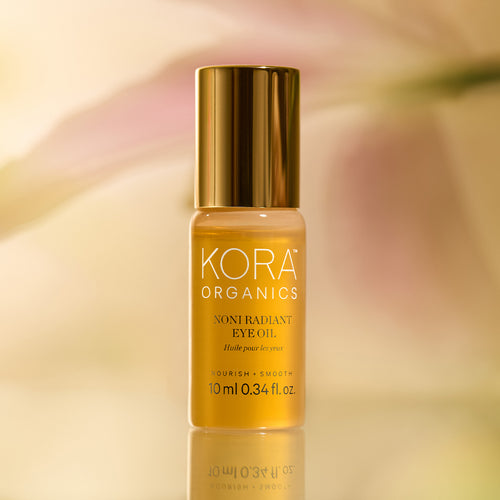
For a mask that fits the “seal and soak” profile, KORA Organics offers a hydration-forward treatment designed for comfort and replenishment.

Milky Mushroom Ultra-Hydrating Mask
Price: $56.00 | Category: Treatments
Why a “milky,” ultra-hydrating mask format matters for barrier repair: milky cream masks are typically built to spread evenly, cushion the skin, and maintain close contact during wear time. That contact matters because evaporation starts immediately after cleansing. When a mask forms a uniform layer, it reduces micro-areas of dryness that can occur with thinner, fast-drying gels. In practical terms, it is easier to maintain a consistent hydration environment across cheeks, around the mouth, and other areas where barrier disruption shows up first.
The result should feel less like a temporary “plump” and more like restored comfort: fewer tight sensations, less post-rinse dryness, and a smoother surface texture that makes daily moisturizer work better.
How to use a barrier mask so it actually supports repair
Barrier repair is as much about what happens before and after the mask as it is about the mask itself.
Cleanse gently and stop at “clean,” not “squeaky.” Over-cleansing increases TEWL by stripping surface lipids that help slow evaporation.
Apply the mask on slightly damp skin when possible. Hydration masks work best when there is water to hold onto. Damp skin is a simple way to increase the water reservoir.
Keep the routine quiet for 24 to 48 hours afterward. If the barrier is compromised, skip exfoliants, strong retinoids, and highly fragranced products so the benefit is not undone by irritation.
Lock it in with a straightforward moisturizer. The mask sets the hydration table; moisturizer keeps the environment stable.
The bottom line
The best skincare masks for repairing the skin barrier are the ones that respect barrier mechanics: they increase water content, reduce TEWL, and minimize irritation. Hydrating cream masks, comfort-first formulas, and well-designed overnight masks tend to be the most dependable options, especially when dryness and sensitivity show up together.
For a barrier-friendly, hydration-focused treatment that fits squarely into that science, Milky Mushroom Ultra-Hydrating Mask offers a replenishing mask step that supports the conditions skin needs to feel calm, resilient, and comfortable again.