




(0) Items
What Actually Works on Wrinkles Around the Eyes (And Why That Skin Is Different)
Posted by KORA Organics in The-organic-editThe skin around the eye is the thinnest on the face, measuring roughly 0.5mm compared to 2mm elsewhere. It has fewer oil glands, less collagen support, and moves constantly through blinking, squinting, and every expression you make throughout the day. That combination makes it one of the first places to show fine lines and one of the most unforgiving when a routine gets it wrong.
So when people search for products that smooth wrinkles around the eyes, the honest answer is not a single hero product. It is a layered approach that addresses the biology of that specific skin. Here is what the research and the formulations actually support.
Why the Eye Area Ages Faster
Collagen loss is the primary driver. According to research published in the British Journal of Dermatology, skin loses approximately 1% of its collagen per year after age 20, and that rate accelerates significantly after menopause. The periorbital zone, the area directly surrounding the eye, is particularly vulnerable because it starts with less structural support to begin with.
Oxidative stress compounds the problem. UV exposure, pollution, and environmental aggressors generate free radicals that degrade elastin and collagen fibers. The eye area lacks the sebaceous density to maintain a natural protective barrier, which means moisture evaporates faster and damage accumulates more readily.
What this means practically: the products you use here need to do more than moisturize. They need to actively support collagen synthesis, neutralize free radical damage, and deliver hydration that holds.
The Role of Antioxidants in Eye Wrinkle Care
Vitamin C is one of the most studied topical antioxidants for photoaged skin. A 2017 review in Nutrients confirmed its role in stimulating collagen synthesis and neutralizing reactive oxygen species, both directly relevant to fine line reduction. For the eye area specifically, brightening is a secondary benefit: dark circles often have an oxidative component, and antioxidant-rich formulas address both concerns simultaneously.

The Kakadu Plum Vitamin C Eye Cream ($$64.00) is built around one of the most potent natural sources of vitamin C on the planet. Kakadu plum, a native Australian fruit, contains up to 100 times more vitamin C by weight than an orange. The formulation pairs that antioxidant density with peptides and hyaluronic acid to address fine lines from multiple angles: collagen support, hydration, and free radical defense working in tandem.
This is not a basic eye cream. It is a targeted treatment that uses the eye area's specific vulnerabilities as its design brief.
Why Retinol Alternatives Have Become the Standard for Sensitive Eye Skin
Traditional retinol is effective at accelerating cell turnover and stimulating collagen, but the eye area tolerates it poorly. The thinness of periorbital skin means irritation, redness, and barrier disruption are common side effects. Dermatologists frequently advise avoiding prescription-strength retinoids directly on the orbital bone for this reason.
Bakuchiol has emerged as the most credible alternative. A double-blind, randomized clinical trial published in the British Journal of Dermatology in 2019 found that 0.5% bakuchiol applied twice daily produced comparable reductions in wrinkle depth and hyperpigmentation to retinol, with significantly less irritation. It works through similar gene expression pathways without the photosensitivity or barrier disruption.

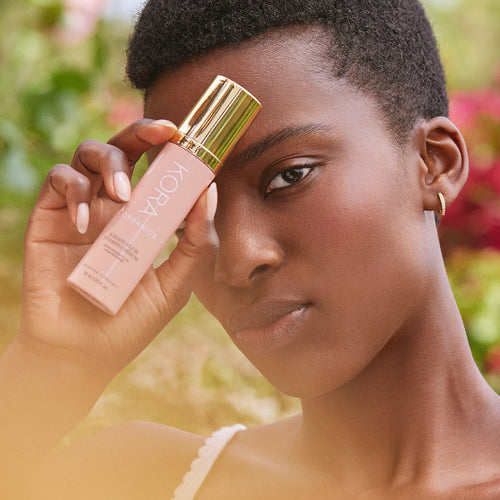
KORA Organics' Plant Stem Cell Retinol Alternative Serum ($$80.00) combines bakuchiol with alfalfa stem cell extract, which supports skin renewal at the cellular level, and a complex of plant stem cells that help protect existing collagen structure. In independent consumer testing, 80% of users described it as more effective than traditional retinol products they had used previously. Because it does not carry retinol's sensitizing risk, it can be applied close to the eye area as part of a comprehensive anti-aging routine.
Used consistently at night, this serum works while skin undergoes its natural repair cycle, which is when the most meaningful structural renewal occurs.
Targeted Nourishment: The Case for an Eye Oil
Creams and serums address different aspects of eye aging, but facial oils serve a distinct function. They reinforce the lipid barrier, slow transepidermal water loss, and deliver fat-soluble antioxidants directly into the skin. For the eye area, where the lipid barrier is naturally thinner, an oil can provide a level of nourishment that water-based formulas cannot replicate.

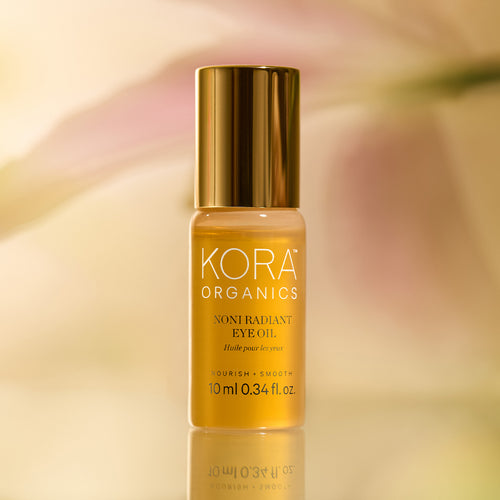
The Noni Radiant Eye Oil ($$46.00) is formulated around certified organic noni extract, which is rich in iridoids, a class of phytonutrients with demonstrated anti-inflammatory and antioxidant properties. It also contains rosehip oil, which delivers naturally occurring trans-retinoic acid alongside essential fatty acids that support barrier repair. The combination addresses puffiness, fine lines, and loss of radiance in a single application.
An eye oil fits most naturally at the end of a nighttime routine, pressed gently into the orbital bone with the ring finger to avoid unnecessary traction on delicate skin.
The Cleansing Step That Protects Everything Else
Any discussion of eye wrinkle care has to include cleansing. Residual makeup, sunscreen, and environmental pollutants left on the skin overnight accelerate oxidative damage. Harsh cleansers strip the lipid barrier and compromise the skin's ability to retain the actives you apply afterward.

The Milky Mushroom Gentle Cleansing Oil ($$48.00) uses silver ear mushroom, a polysaccharide-rich ingredient with a documented ability to bind water at a rate comparable to hyaluronic acid, to cleanse without stripping. It emulsifies with water to remove makeup and impurities, including eye makeup, without the mechanical friction that contributes to fine line formation over time. In consumer testing, 100% of users reported it removed impurities without causing irritation.
This matters more than it might seem. The physical habit of rubbing or pulling at eye makeup is a documented contributor to periorbital aging. A cleansing oil that dissolves product on contact reduces the need for that friction entirely.
Building a Routine That Addresses Eye Wrinkles Systematically
The products above are not interchangeable. They address different mechanisms and belong at different points in a routine.
Start with the Milky Mushroom Gentle Cleansing Oil to remove the day's buildup without barrier disruption. Apply the Plant Stem Cell Retinol Alternative Serum across the face in the evening, feathering it toward the orbital bone. Follow with the Kakadu Plum Vitamin C Eye Cream, which delivers targeted antioxidant and peptide support directly to the periorbital zone. Finish with the Noni Radiant Eye Oil to seal in moisture and deliver lipid-soluble nutrients overnight.
The science behind each of these steps is established. The ingredients are certified organic and backed by independent testing. And the routine addresses eye aging at the level it actually occurs: barrier integrity, collagen support, oxidative damage, and cellular renewal working together rather than in isolation.
That is what smoothing wrinkles around the eyes actually requires.