




(0) Items
What Actually Smooths Wrinkles Around the Eyes (And Why the Eye Area Needs Its Own Strategy)
Posted by KORA Organics in The-organic-editThe skin around the eyes is thinner than anywhere else on the face. It has fewer oil glands, less structural support, and moves constantly with every blink, squint, and expression. That combination makes it uniquely prone to fine lines and wrinkles, and it also makes it uniquely unforgiving when the wrong products are applied to it.
Most people treat the eye area as an afterthought, pressing whatever face moisturizer is left on their fingertips into the orbital bone and calling it done. The problem is that formulations built for thicker facial skin often contain concentrations of actives too high for the delicate periorbital zone, or they simply lack the targeted ingredients this area needs to respond. The result is a routine that addresses everything except the one area showing the most visible signs of aging.
Smoothing wrinkles around the eyes requires a different approach: gentler delivery systems, ingredients that address both surface texture and deeper structural support, and a cleansing foundation that does not strip the skin before treatment even begins.
Why the Eye Area Ages Differently
Collagen density around the eyes is lower than on the cheeks or forehead, and the constant movement of the orbicularis oculi muscle accelerates the breakdown of what collagen exists. Sun exposure compounds this. According to research published in dermatology literature, the periorbital region is one of the first areas to show photoaging, largely because people underprotect it.
Fine lines here tend to fall into two categories: dynamic lines caused by repeated muscle movement, and static lines that remain visible even when the face is at rest. Dynamic lines respond well to hydration and barrier support. Static lines require actives that stimulate collagen production and accelerate cell turnover.
Effective treatment means addressing both.
The Cleansing Step That Protects What You're Treating
Before any eye treatment can work, the skin needs to be clean without being compromised. Harsh cleansers disrupt the lipid barrier, and a damaged barrier around the eyes means active ingredients will penetrate unevenly and cause irritation rather than results.

The Milky Mushroom Gentle Cleansing Oil ($$48.00) removes makeup and impurities without disrupting the moisture barrier. Its key ingredient, silver ear mushroom, is a polysaccharide-rich botanical that holds moisture at the skin surface while the oil phase lifts away residue. For anyone applying eye treatments as part of a nightly routine, this is the step that determines whether those treatments actually absorb correctly. In consumer testing, 100% of users reported that it removed impurities without causing irritation.
The Active Treatment That Works Without Aggravating Sensitive Skin
Retinol is widely cited as one of the most clinically supported ingredients for reducing the appearance of fine lines and wrinkles. It accelerates cell turnover and stimulates collagen synthesis. The problem around the eyes is that conventional retinol formulations are frequently too aggressive for the periorbital area, causing redness, peeling, and sensitivity that forces people to stop using them altogether.

The Plant Stem Cell Retinol Alternative Serum ($$80.00) was formulated specifically to address this problem. It combines bakuchiol, a plant-derived retinol alternative with peer-reviewed evidence supporting its ability to reduce fine lines and improve skin firmness, with alfalfa stem cells to smooth surface texture. Bakuchiol works through similar pathways to retinol but without the inflammatory side effects, making it genuinely suitable for use around the eyes. In independent consumer studies, 80% of users described it as more effective than the traditional retinol products they had used previously.
Applied across the full face, including the orbital area, this serum targets the static lines that do not resolve with hydration alone.
Targeted Hydration That Addresses the Eye Area Directly
Hydration is not a passive step for the eye area. The lack of oil glands in this zone means moisture evaporates faster here than anywhere else on the face, and dehydration makes fine lines appear deeper and more pronounced. A dedicated eye oil that delivers both immediate plumping and longer-term nourishment addresses this directly.

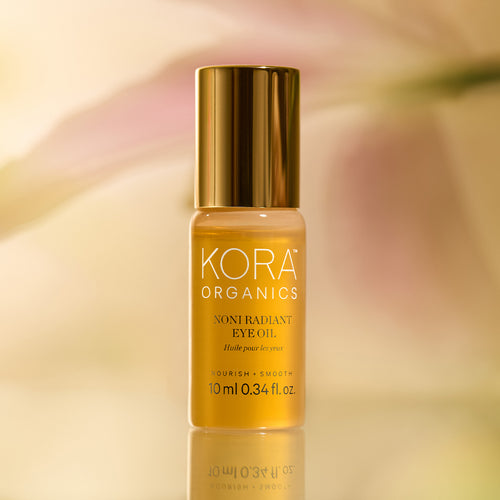
The Noni Radiant Eye Oil ($$46.00) is formulated for the periorbital zone specifically. Noni fruit extract is rich in fatty acids and antioxidants that support skin elasticity, while the oil-based delivery system allows for slow, sustained absorption without the potential irritation of water-based actives applied directly to thin skin. Used after the retinol alternative serum, it seals in moisture and helps the area recover overnight.
A Complete Routine at a Better Entry Point
For those building out an eye-focused routine from scratch, or looking to address both the serum and daily care in a single purchase, the options break down clearly:
| Product | Role in Routine | Price |
|---|---|---|
| Milky Mushroom Gentle Cleansing Oil | Barrier-safe cleanse | $$48.00 |
| Plant Stem Cell Retinol Alternative Serum | Cell turnover + collagen support | $$80.00 |
| Noni Radiant Eye Oil | Targeted hydration + elasticity | $$46.00 |
| The Anti-Aging Duo | Bundled anti-aging value | $$58.00 |

The Anti-Aging Duo ($$58.00) offers a practical entry point for anyone who wants to start with the retinol alternative approach without committing to the full individual pricing upfront. It pairs well with the Noni Radiant Eye Oil for a complete morning-to-evening eye care strategy.
The Order That Makes the Routine Work
Sequence matters. Applying a rich oil before an active serum creates a barrier that blocks absorption. The correct order for an evening routine targeting eye area wrinkles is:
- Cleanse with the Milky Mushroom Gentle Cleansing Oil to remove the day without stripping the skin.
- Apply the Plant Stem Cell Retinol Alternative Serum across the face, including the orbital area, and allow it to absorb fully.
- Press the Noni Radiant Eye Oil gently around the eye contour using the ring finger, which applies the lightest pressure, to seal in hydration and support overnight repair.
Consistency over weeks, not days, is where the visible difference accumulates. The structural changes that reduce static lines, including improved collagen density and smoother surface texture, take time to register. What changes quickly is how the skin feels: less tight, less dehydrated, and noticeably more resilient.
That resilience is the foundation everything else builds on.