




(0) Items
What Actually Smooths Wrinkles Around the Eyes (And Why Most Products Miss the Mark)
Posted by KORA Organics in The-organic-editThe eye area is one of the first places fine lines appear and one of the hardest to treat effectively. The skin there is roughly four times thinner than the skin on the rest of the face, it produces almost no sebum, and it moves constantly throughout the day from squinting, blinking, and expression. Most wrinkle-targeting products are formulated for facial skin in general, which is why so many people follow consistent routines and still find crow's feet and under-eye creasing stubbornly resistant to change.
The question worth asking is not just "which products help" but why specific formulations work where others fall short. The answer comes down to ingredient delivery, concentration, and the biology of periorbital skin.
Why the Eye Area Requires a Different Approach
Standard moisturizers and serums often contain actives at concentrations calibrated for thicker facial skin. When applied around the eyes, they may not penetrate efficiently, or they may cause irritation because the barrier is more permeable. Conversely, products formulated too gently for the eye area may hydrate the surface without addressing the deeper structural changes that cause wrinkling.
Two mechanisms drive most visible fine lines around the eyes: collagen and elastin degradation over time, and chronic dehydration of an already lipid-poor zone. Effective treatment requires addressing both simultaneously, which means pairing a lipid-rich topical that replenishes the skin's moisture barrier with an active ingredient that stimulates cellular renewal at a deeper level.
This dual approach reflects a broader shift in how consumers and formulators are thinking about anti-aging. The market has moved away from single-ingredient hero products toward layered routines where each step has a specific, complementary function. Independent research consistently shows that combination approaches outperform single-product regimens for fine line reduction, particularly around the eyes.
The Case for an Eye-Specific Oil

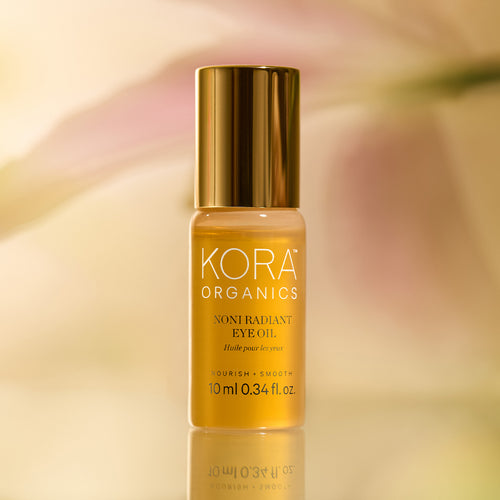
The Noni Radiant Eye Oil ($46) is built around a principle that dermatologists have long understood: oil-based formulations are structurally compatible with the skin's own lipid matrix in a way that water-based creams are not. An oil absorbs into the stratum corneum and reinforces the barrier rather than sitting on top of it, which matters especially in a zone that produces almost no natural oil of its own.
The noni extract at the center of this formula is rich in iridoids, a class of compounds with well-documented antioxidant and anti-inflammatory activity. Oxidative stress is a primary driver of collagen breakdown, and the eye area is particularly vulnerable because it is constantly exposed and rarely shielded by the sebum layer that protects other parts of the face. Applying a concentrated antioxidant source directly to the eye contour addresses one of the core reasons fine lines form and deepen there.
The oil texture also has a mechanical advantage. It delivers active ingredients to the skin in a slow-release format, extending contact time and improving absorption compared to lighter serums that evaporate quickly.
The Renewal Layer That Drives Real Change

Surface hydration addresses one half of the problem. The other half is cellular turnover, the rate at which the skin produces new cells and sheds older ones. As that rate slows with age, fine lines become more pronounced and the skin loses its capacity to repair itself efficiently.
Traditional retinol is the most studied ingredient for accelerating turnover, but it carries a well-known downside around the eyes specifically: it tends to cause irritation, peeling, and photosensitivity in the very area that can least tolerate it. That limitation has driven significant interest in plant-based alternatives, and it is one of the clearest trend lines in prestige skincare right now. Bakuchiol, in particular, has moved from niche ingredient to mainstream formulation choice because clinical data shows it delivers comparable smoothing effects without the inflammatory response.
The Plant Stem Cell Retinol Alternative Serum ($80) combines bakuchiol with alfalfa stem cells, which work by supporting the skin's own regenerative processes rather than simply accelerating surface shedding. The distinction matters. Conventional retinol works by forcing faster cell turnover, which is why it causes irritation. Bakuchiol and plant stem cell technology work with the skin's existing renewal pathways, making the approach significantly more tolerable for daily use around the eye contour.
In consumer testing, 80% of users described this serum as more effective than traditional retinol products they had used previously. That figure is notable because it comes from people who had already tried the conventional approach and found this one more compelling.
How the Two Products Work Together
The logic of layering these two products is straightforward once you understand the mechanisms involved.
| Product | Primary Function | Key Actives | Best For |
|---|---|---|---|
| Noni Radiant Eye Oil | Barrier repair and antioxidant protection | Noni extract, botanical oils | Dehydration lines, surface crepiness, oxidative damage |
| Plant Stem Cell Retinol Alternative Serum | Cellular renewal and collagen support | Bakuchiol, alfalfa stem cells | Established fine lines, loss of firmness, slow turnover |
The serum goes on first, on clean skin, to allow the actives direct contact with the skin surface. The eye oil follows, sealing in the treatment layer while delivering its own antioxidant and barrier-supportive benefits. This sequence mirrors the way effective layering works across the rest of a skincare routine: actives first, then occlusives.
Starting the Routine Right
Cleansing before any treatment step is not incidental. Residue from makeup, sunscreen, or previous products creates a physical barrier that reduces how well actives absorb. For a routine focused on the eye area, a gentle, thorough cleanse matters more than many people realize.
The Active Algae Calming Cleansing Balm - Sale ($36) dissolves eye makeup and surface buildup without stripping, which is the correct standard for a cleanser being used before a treatment-focused eye routine. Its microalgae base supports the skin's balance rather than disrupting it, leaving the surface ready to receive actives rather than in a compromised state.
The Practical Entry Point

For anyone building this routine from scratch, The Anti-Aging Duo ($58) offers a structured starting point that pairs the core renewal products together. It removes the guesswork from sequencing and represents a more accessible entry into the full routine before committing to individual full-size purchases.
The eye area responds slowly to treatment. The structural changes that cause fine lines develop over years, and reversal is measured in weeks and months, not days. What separates routines that produce visible results from those that do not is usually not the effort involved but whether the products are addressing the right mechanisms in the right order. Hydration, antioxidant protection, and cellular renewal, applied consistently and in sequence, are the combination that moves the needle.