




(0) Items
The Right Eye Care Routine Before Makeup Actually Starts at the Sink
Posted by KORA Organics in The-organic-editMost people treat eye care as the last step before foundation. It shouldn't be. The products you apply around your eyes in the first 60 seconds of your routine determine how every product layered on top behaves, how long it lasts, and whether the delicate orbital zone ends up irritated or genuinely supported by midday.
The search for the best eye care products before makeup is really a search for two things: the right prep sequence and formulas that work with skin rather than against it.
Here is how to build that sequence correctly, and which products belong in it.
Why the Eye Zone Needs Its Own Logic
The skin around your eyes is approximately 40% thinner than skin on the rest of your face. That structural difference means it loses moisture faster, shows dehydration more visibly, and responds more acutely to harsh cleansing or heavy occlusive products applied before makeup. A moisturizer that works well on your cheeks can sit heavily in the orbital area and cause concealer to crease within an hour.
Effective pre-makeup eye care is therefore not about applying more product. It is about applying the right products in an order that primes without overloading.
Cleansing First, and Doing It Gently
Residual product from the night before, including overnight eye cream, facial oil, or SPF, creates a film that prevents morning skincare from absorbing properly. If you apply eye cream over that film, you are essentially layering on top of yesterday's routine.
The cleansing step matters more around the eyes than anywhere else on the face, precisely because the skin there is thinnest and most reactive to surfactant-heavy formulas.

The Milky Mushroom Gentle Cleansing Oil ($$48.00) is built around silver ear mushroom, an ingredient known for its ability to retain moisture at the skin surface while the oil phase dissolves impurities. In consumer testing, 100% of participants reported that it removed impurities without causing irritation. That figure is not incidental. Around the eyes, irritation during cleansing is the most common reason the area looks red or puffy before makeup even begins.
The dual-phase formula emulsifies with water, which means it rinses cleanly without leaving residue that would interfere with what comes next. For anyone who wears eye makeup the night before, or applies SPF that migrates toward the orbital zone, this is the cleanser to use first.
If your skin runs drier or more sensitive and you prefer a balm texture, the Active Algae Calming Cleansing Balm ($$48.00) is an equally clean starting point. Microalgae and pineapple enzymes work together to dissolve makeup and surface buildup without stripping. The balm texture is particularly well-suited to morning routines where you want the cleanse to feel more like a reset than a scrub.

The Treatment Step Most Routines Skip
After cleansing and before eye cream, there is a window to apply a targeted treatment serum. Most people skip this around the eyes because they assume it is redundant. It is not.

The Plant Stem Cell Retinol Alternative Serum ($$80.00) combines bakuchiol and alfalfa to address fine lines and surface texture without the inflammation associated with traditional retinol. Applied as a thin layer around the orbital bone before eye cream, it works at the level of cell renewal rather than surface hydration. In independent consumer studies, 80% of participants described it as more effective than traditional retinol products they had used previously.
This matters for pre-makeup prep specifically because surface texture around the eyes directly affects how concealer and foundation sit. Smoother skin holds product more evenly, which reduces the need for heavy coverage and the creasing that comes with it. Applied at least five minutes before your eye cream, the serum absorbs fully and leaves the area prepped rather than tacky.
This step is especially relevant for anyone over 30 who has noticed that concealer settles into fine lines by early afternoon. The serum addresses the underlying texture rather than just masking it.
Choosing the Right Eye Product for Your Skin Type
Once the treatment step is complete, the eye-specific product you choose depends on what your skin needs most.
For dryness, dehydration, and a luminous finish before makeup:

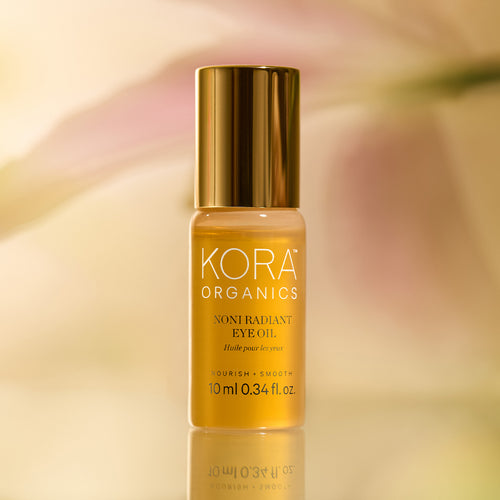
The Noni Radiant Eye Oil ($$46.00) is a 10mL concentrated formula that delivers nourishment without the heaviness that causes concealer to move. Applied with a light press-and-tap motion around the orbital bone, it absorbs within two to three minutes and leaves the area visibly more supple. The oil base makes it particularly effective for anyone whose under-eye area looks crepey or tight under makeup, a common issue in dry climates, during travel, or on long-haul commute days when air conditioning or recycled cabin air accelerates moisture loss.
For brightness, dark circles, and antioxidant protection:

The Kakadu Plum Vitamin C Eye Cream ($$64.00) takes a different approach. Kakadu plum is one of the most concentrated natural sources of vitamin C available, and in this cream it works to brighten the under-eye area and protect against the oxidative stress that worsens pigmentation over time. The cream texture provides a slightly more structured base than an oil, which makes it a strong option for anyone layering a full-coverage concealer on top. It also suits mornings when you need your eye area to look awake without relying entirely on product coverage to do the work.
For office-to-dinner transitions, the Kakadu Plum Eye Cream is the more practical choice. It holds up through a full workday and provides enough brightening effect that a light touch-up is sufficient rather than a full reapplication.
The Sequence, Laid Out Plainly
The full pre-makeup eye routine runs in four steps:
- Cleanse with the Milky Mushroom Gentle Cleansing Oil or the Active Algae Calming Cleansing Balm to remove overnight product and residue.
- Apply the Plant Stem Cell Retinol Alternative Serum in a thin layer around the orbital bone and allow it to absorb for at least five minutes.
- Follow with either the Noni Radiant Eye Oil (for dryness and luminosity) or the Kakadu Plum Vitamin C Eye Cream (for brightness and structure).
- Wait a minimum of three to five minutes before applying primer or concealer so the eye product has time to set.
That sequence takes under ten minutes and addresses cleansing, renewal, and targeted hydration before a single drop of makeup touches the skin. The result is a surface that holds product, resists creasing, and does not require heavy coverage to look polished.
The products that perform best before makeup are the ones that prepare the skin to function on its own. Everything else follows from that.