




(0) Items
The Real Reason Your Under-Eye Skin Looks Crepey (And What Actually Fixes It)
Posted by KORA Organics in The-organic-editDry, crepey under-eye skin is one of those concerns that standard moisturizers rarely resolve. You apply your regular face cream, it helps for an hour, and by midday the fine creasing is back. That cycle is frustrating because it points to the wrong product being used, not a problem that cannot be solved.
Understanding why the under-eye area behaves differently from the rest of your face is the starting point for choosing treatments that actually work.
Why the Under-Eye Area Is Its Own Problem
The skin beneath the eye is roughly 0.5mm thick, compared to 2mm on most of the face. It contains almost no sebaceous glands, which means it produces little to no natural oil. Without that lipid layer to slow moisture loss, the skin dehydrates faster and has far less structural support than skin elsewhere.
When collagen and elastin production slows with age, that already-thin skin loses its ability to snap back. The result is a crinkled, papery texture that looks worse in dry climates, after poor sleep, or when the skin is stripped by a harsh cleanser.
What this skin needs is not more of a standard moisturizer. It needs targeted lipid replenishment, collagen support, and protection from further barrier damage, delivered in formulas light enough not to cause milia or puffiness.
The Treatments That Address the Actual Problem
Lipid-Rich Eye Oils
An oil-based treatment addresses crepey texture at the source by replacing the lipids the under-eye skin cannot produce on its own. Oils absorb into the surface layers and form a semi-occlusive barrier that slows transepidermal water loss, which is the primary driver of that dry, papery look.

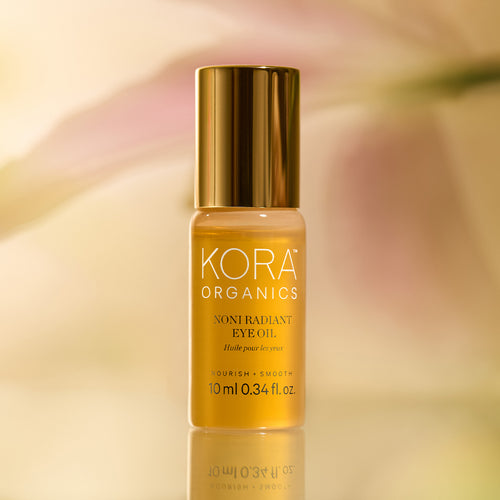
The Noni Radiant Eye Oil ($46) is built around this logic. Noni extract is high in fatty acids and antioxidants that support skin barrier function, while rosehip oil contributes essential fatty acids and beta-carotene, a precursor to vitamin A that encourages cell turnover in a gentle, non-irritating form. The oil format matters here: it delivers concentrated nourishment without the film-forming agents or thickeners found in cream formulas that can stress delicate eye-area skin.
Applied at night, a single drop pressed gently along the orbital bone lets the oils absorb while you sleep, which is when skin repair activity is at its highest.
Vitamin C Eye Creams
Crepey texture is not only a hydration problem. Loss of collagen density is a major contributor, and vitamin C is one of the few topical ingredients with solid evidence behind its role in stimulating collagen synthesis. It also inhibits oxidative damage from UV exposure, which accelerates collagen breakdown in the thin skin around the eyes.

The Kakadu Plum Vitamin C Eye Cream ($64) uses kakadu plum, which is one of the most concentrated natural sources of vitamin C available. The advantage of a plant-derived vitamin C source over synthetic ascorbic acid is stability. Ascorbic acid degrades quickly on exposure to air and light, which is why many vitamin C products lose potency before they are halfway used. Kakadu plum delivers the antioxidant benefit in a more stable botanical matrix, making it particularly well-suited for a product stored in a jar.
This is a morning treatment. Vitamin C's antioxidant activity works best when it can intercept free radical damage from daylight exposure throughout the day.
Retinol Alternatives for Cell Renewal
One of the reasons crepey skin persists despite good hydration is that cell turnover slows significantly with age. Dead surface cells accumulate, and the skin loses the smooth, plump quality that reflects light evenly. Retinol is the classic solution, but it is notoriously irritating around the eyes, where the skin is too thin to tolerate the inflammation it typically causes.

The Plant Stem Cell Retinol Alternative Serum ($80) combines bakuchiol and alfalfa stem cells to encourage cell renewal without triggering the peeling and sensitivity associated with conventional retinol. Bakuchiol activates retinol receptors in the skin and produces comparable results in studies on fine lines and texture, but without the barrier disruption. For under-eye skin that is already compromised and thin, that distinction is not a minor detail. It is what makes the ingredient appropriate for the area at all.
Applied as part of an evening routine, the serum addresses crepey texture over time by steadily improving surface cell turnover and supporting the structural proteins that give skin its resilience.
A Quick Reference: Which Product Does What
| Product | Primary Benefit | Best Use |
|---|---|---|
| Noni Radiant Eye Oil | Lipid replenishment, moisture barrier support | Evening |
| Kakadu Plum Vitamin C Eye Cream | Collagen support, antioxidant protection | Morning |
| Plant Stem Cell Retinol Alternative Serum | Cell turnover, fine line reduction | Evening |
The Cleanser Step That Most People Overlook
Crepey under-eye skin is often made worse by cleansing. Foaming cleansers and micellar waters that require rubbing to remove eye makeup are two of the most common causes of mechanical stress to an already fragile area. Repeated tugging degrades the collagen fibers that keep skin taut over time.

The Milky Mushroom Gentle Cleansing Oil ($48) dissolves makeup and sunscreen through the oil-dissolves-oil principle, which means less physical friction at removal. Silver ear mushroom, a key ingredient, is a high-molecular-weight polysaccharide that forms a moisture-retaining film on the skin surface, so the cleansing step leaves the under-eye area hydrated rather than stripped. A 100% consumer satisfaction rate for removing impurities without irritation makes it a logical anchor for any routine built around protecting delicate skin.
Putting It Together
The most effective approach to dry, crepey under-eye skin is layered: protect the moisture barrier, support collagen production, encourage cell renewal, and stop doing the things that cause daily damage. No single product accomplishes all of that, but a considered combination of the right oil, cream, serum, and cleanser can produce visible improvement in texture and hydration over consistent use.
The under-eye area responds slowly because its repair capacity is limited. Consistency over weeks matters more than intensity on any single night. Start with the cleanser to stop compounding the problem, add the eye oil at night for immediate barrier support, and layer in the vitamin C cream and retinol alternative serum as your routine becomes established.