




(0) Items
The Real Reason Your Eye Cream Isn't Clearing Dark Circles
Posted by KORA Organics in The-organic-editDark circles are one of the most searched skincare concerns on the internet, and yet most people trying to address them are using the wrong product for the wrong reason. The issue is not that eye creams don't work. The issue is that dark circles have distinct causes, and each cause responds to a different approach. Using a hydrating cream when your circles are driven by pigmentation, or a brightening serum when the real culprit is thin, crepey skin, will leave you frustrated and no closer to a solution.
Here is how to actually match a product to the problem.
Why Dark Circles Look Different on Different People
Before reaching for any product, it helps to understand what is creating the shadow under your eye. There are three primary drivers.
Pigmentation is the most common cause. Melanin deposits in the skin under the eye create a brownish or grayish tone that no amount of sleep will fix. This is particularly common in deeper skin tones and tends to worsen with sun exposure. The fix here is a targeted brightening ingredient, something that interrupts melanin production or accelerates cell turnover to reveal fresher skin at the surface.
Vascular pooling shows up as a bluish or purplish tint, caused by blood vessels visible through the thin skin beneath the eye. The skin in this area is significantly thinner than the rest of the face, which means the underlying vasculature shows through more easily. Strengthening and thickening the skin over time, while supporting circulation, is the most effective long-term strategy here.
Volume loss and shadowing happen when the skin loses elasticity and the fat pad beneath the eye begins to hollow out, creating a shadow regardless of pigmentation. This is largely a structural concern and requires ingredients that support collagen production and skin density.
Many people are dealing with more than one of these at once, which is exactly why a single-ingredient, one-size-fits-all eye cream rarely delivers visible results.
The Case for an Eye Oil Over a Cream
Most people default to a cream format for the eye area out of habit. But for dark circles specifically, an oil-based formula has a real structural advantage. Oils penetrate the lipid barrier more efficiently than water-based creams, which means active ingredients reach the dermis where pigmentation and collagen degradation actually occur. An oil also creates less drag during application, which matters for a zone of skin this delicate.

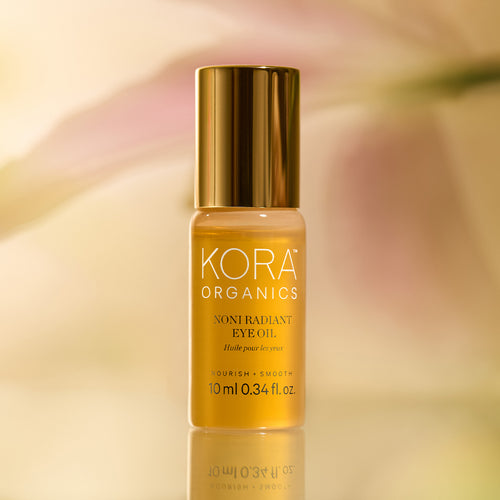
The Noni Radiant Eye Oil ($46) addresses this directly. The formula centers on certified organic noni fruit extract, which is rich in iridoids, a class of phytonutrients with demonstrated antioxidant activity that helps neutralize the oxidative stress contributing to under-eye discoloration. It also contains sea buckthorn, one of the few plant-derived sources of vitamin A that is gentle enough for the eye area, alongside rosehip and a blend of botanical oils chosen for their ability to absorb without heaviness.
The result is a formula that visibly brightens while simultaneously improving the texture and resilience of the skin itself. For people dealing with both pigmentation and the thin, papery quality that makes circles look worse, this dual action matters. It is not just brightening on the surface; it is improving the skin's underlying structure over time.
When Pigmentation Needs More Firepower
For stubborn hyperpigmentation that extends beyond the eye area, or for those who want to address discoloration more comprehensively across the face, pairing the eye oil with a targeted treatment serum accelerates results considerably.

The Plant Stem Cell Retinol Alternative Serum ($80) uses bakuchiol and alfalfa stem cells to stimulate cell turnover without the irritation that conventional retinol causes, particularly around the eye area where sensitivity is highest. Retinol derivatives are effective for pigmentation because they accelerate the shedding of melanin-heavy surface cells, but traditional retinol is notoriously difficult to use near the eyes. This formula delivers the same renewal mechanism through a botanical pathway, making it viable for use closer to the orbital zone without the risk of redness or peeling.
Used on the periorbital area with care, or across the cheeks and temples where pigmentation often mirrors the under-eye tone, it works alongside the eye oil to create a more even, luminous result across the full face.
The Step That Most People Skip
Brightening actives cannot do their job if they are being applied over a skin barrier that is congested or compromised. The eye area accumulates residual makeup, SPF, and environmental particulates throughout the day, and most cleansers do not remove them completely. This matters more than people realize, because residual occlusive product on the skin's surface prevents the penetration of anything applied afterward.

The Milky Mushroom Gentle Cleansing Oil ($48) is specifically formulated to dissolve oil-based residue, including waterproof eye makeup, without stripping the skin's moisture barrier. Silver ear mushroom provides polysaccharides that retain water in the skin during the cleansing process, which is particularly relevant for the eye area where over-cleansing can thin the skin further and exacerbate the vascular visibility that contributes to dark circles. A clean base is not a bonus step. It is the condition under which everything else actually works.
The Kakadu Plum Option for Vitamin C-Driven Brightening
For those who prefer a more traditional cream texture and want vitamin C as their primary brightening mechanism, there is a dedicated option.

The Kakadu Plum Vitamin C Eye Cream ($64) is built around Kakadu plum, an Australian superfruit that contains one of the highest naturally occurring concentrations of vitamin C found in any plant source. Vitamin C inhibits the enzyme tyrosinase, which is responsible for melanin synthesis, making it one of the most clinically supported ingredients for pigmentation-related dark circles. Unlike synthetic ascorbic acid, which oxidizes quickly and can cause sensitivity, the vitamin C derived from Kakadu plum is stabilized within the fruit's natural matrix, giving it better tolerance and shelf stability.
This cream suits those who want a richer, more emollient texture around the eye, or who are dealing primarily with pigmentation rather than the structural thinning that the eye oil addresses.
Choosing the Right Starting Point
The question is not which product is best in the abstract. It is which product matches the specific nature of your dark circles. Pigmentation responds to vitamin C and cell turnover. Thin, vascular skin responds to nourishing oils that build barrier resilience over time. Both benefit from a clean base and consistent application.
Start by identifying what you are actually looking at in the mirror, then build from there. The answers have always been more specific than the generic advice to "get more sleep."