





(0) Items
The Real Reason Your Eye Cream Isn't Brightening Dark Circles (And What to Use Instead)
Posted by KORA Organics in The-organic-editDark circles are one of the most searched skincare concerns for a reason: they are stubbornly common and notoriously difficult to treat. Most people reach for concealer and move on. But if you want a longer-term solution, the answer lies in understanding what is actually causing the darkness under your eyes, then choosing products formulated to address that specific cause.
This is where most eye creams fall short. They moisturize. They plump temporarily. They rarely do the deeper work.
Why Dark Circles Form in the First Place
There are three primary causes, and they are not interchangeable.
The first is pigmentation. Melanin deposits under the eye, often triggered by sun exposure, inflammation, or post-acne activity, create a brownish discoloration. This type responds best to antioxidants and brightening actives like vitamin C.
The second is vascular pooling. Blood vessels close to the surface of thin under-eye skin can create a bluish or purplish tint. This is the type most associated with fatigue and genetics. Ingredients that support circulation and reduce oxidative stress help here.
The third is structural shadowing, caused by volume loss and skin laxity that creates a hollow or sunken appearance. This is largely a concern for aging skin and is more about firmness than pigmentation.
Most people have a combination of all three. Effective treatment usually starts with the pigmentation and vascular components, since those respond most directly to topical skincare.
What the Research Says About Vitamin C and Dark Circles
Vitamin C is one of the most studied brightening ingredients in dermatology. Research has confirmed that topical vitamin C inhibits melanin synthesis by interfering with the enzyme tyrosinase, which is responsible for melanin production. It also addresses oxidative stress in the skin, which contributes to both pigmentation and vascular discoloration.
The catch: not all vitamin C formulations are equal. Stability matters. Concentration matters. And the source of the vitamin C matters more than most brands acknowledge.
Kakadu plum is one of the most concentrated natural sources of vitamin C on the planet, containing up to 100 times more vitamin C by weight than oranges. It delivers a more stable, bioavailable form of the vitamin compared to synthetic ascorbic acid, which is notoriously prone to oxidation.
The Eye Cream Built Around That Ingredient

The Kakadu Plum Vitamin C Eye Cream ($$64.00) is formulated specifically around this ingredient. It combines certified organic kakadu plum extract with niacinamide, a B vitamin that has its own well-documented brightening and barrier-strengthening properties. Research has found that niacinamide at 5% concentration significantly reduced hyperpigmentation and improved skin tone evenness over 12 weeks.
Together, these two actives work on both the melanin pathway and the skin barrier, which matters because a compromised barrier allows more UV and environmental damage to accumulate around the delicate eye area.
The texture is rich enough to address the thinness of under-eye skin without feeling heavy. It absorbs cleanly and layers well under SPF or concealer, which is important for a morning product.
The Supporting Role of a Retinol Alternative
Vitamin C handles the brightening side of dark circles. But if laxity and fine lines are compounding the issue, the area around the eye also needs something that works on cell turnover and collagen support.

The Plant Stem Cell Retinol Alternative Serum ($$80.00) uses bakuchiol and alfalfa stem cells to replicate the collagen-stimulating effects of retinol without the irritation that makes traditional retinol unsuitable for the eye area. Research has found bakuchiol to be comparable to retinol in reducing fine lines and improving skin firmness, with significantly fewer side effects.
Applied to the orbital bone area at night before the eye cream, this serum supports the structural component of dark circles over time. Firmer, thicker skin reduces the visibility of underlying vessels and shadows.
A Note on Cleansing
This is a step that directly affects how well brightening products perform. Residual makeup, SPF, and environmental particulates left around the eye area after cleansing create a barrier that limits absorption and, over time, contribute to inflammation and oxidative stress.

The Milky Mushroom Gentle Cleansing Oil ($$48.00) dissolves eye makeup and SPF without tugging or stripping. Silver ear mushroom extract in the formula helps maintain moisture levels during cleansing, which matters for the thin, easily dehydrated skin around the eye. In independent consumer testing, 100% of users reported it removed impurities without irritation.
Tugging at the eye area during makeup removal is one of the most overlooked contributors to under-eye skin aging. A cleansing oil that dissolves product on contact eliminates that friction entirely.
The Dry Oil Option for a Different Texture Preference

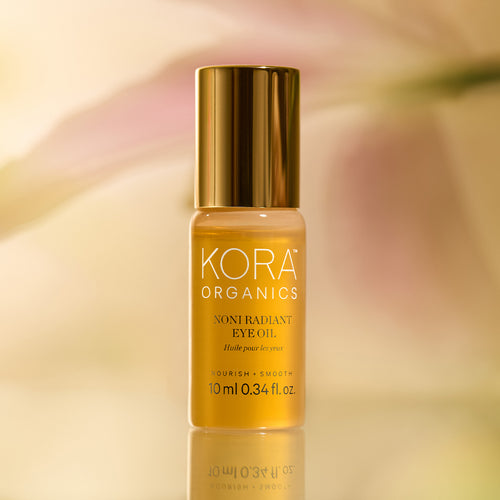
For those who prefer an oil-format treatment, the Noni Radiant Eye Oil ($$46.00) is worth considering alongside the eye cream. Noni extract is rich in iridoids, compounds shown in research to support skin radiance and reduce oxidative damage. The dry-oil texture absorbs quickly and works well layered under the Kakadu Plum Eye Cream for an added brightening and nourishing effect, particularly for drier skin types.
How to Put This Together
A practical routine for dark circles looks like this:
- Morning: Cleanse with the Milky Mushroom Gentle Cleansing Oil, apply the Kakadu Plum Vitamin C Eye Cream, follow with SPF.
- Evening: Cleanse again, apply the Plant Stem Cell Retinol Alternative Serum to the orbital area, then layer the Kakadu Plum Eye Cream or Noni Radiant Eye Oil on top.
Consistency is the variable most people underestimate. Vitamin C and bakuchiol both require regular use over six to twelve weeks before the full effect is visible. The research supports this timeline, and so does clinical experience.
Dark circles rarely disappear overnight. But with the right combination of brightening actives, barrier support, and a clean foundation from proper cleansing, the improvement is real and measurable.