




(0) Items
The Real Reason Your Dark Circles Won't Budge (And What Actually Helps)
Posted by KORA Organics in The-organic-editYou've tried the cold spoons, the extra sleep, the cucumber slices. The dark circles are still there. That's not a failure of effort. It's a failure of understanding what's actually causing them.
Dark circles are not a single problem. They're three different problems that can look nearly identical on the surface, and treating them with a generic "brightening" cream without knowing which type you're dealing with is why most people see disappointing results.
Why Dark Circles Are More Complicated Than They Look
The three primary causes are pigmentation, vascular visibility, and structural shadowing. Pigmentation-based darkness comes from excess melanin deposited under the eye, often triggered by sun exposure, inflammation, or genetics. Vascular darkness is caused by blood vessels sitting close to the skin's surface showing through thin, translucent skin. Structural shadowing is the hollow effect created by volume loss or bone structure, where light hits the under-eye at an angle that creates a shadow regardless of skin tone.
Most people have a combination of at least two. And the reason this matters when choosing an eye product: ingredients that address pigmentation work differently from ingredients that address skin thickness and circulation. A formula that brightens melanin deposits won't do much for vascular visibility, and vice versa.
The most effective approach targets multiple pathways at once, using ingredients that brighten, strengthen, and support circulation simultaneously.
What to Actually Look for in an Eye Product
The under-eye area has some of the thinnest skin on the face, typically around 0.5mm compared to 2mm elsewhere. That thinness is precisely why it shows fatigue, dehydration, and aging so readily. It also means the skin here is more reactive to harsh actives, which rules out many conventional brightening approaches.
The best eye products for dark circles tend to combine:
- Antioxidants that neutralize oxidative stress and support skin clarity
- Botanicals that support microcirculation, reducing the pooled blood appearance that contributes to bluish-purple tones
- Nourishing lipids that plump the skin and reduce the translucency that makes vessels visible
- Gentle brightening agents that address pigmentation without the irritation risk of hydroquinone or aggressive chemical exfoliants
Oils are often underestimated here. Because the under-eye skin is thin and lipid-poor, oil-based formulas can penetrate effectively, deliver concentrated actives, and physically improve the skin's opacity over time.
The Eye Product Worth Knowing

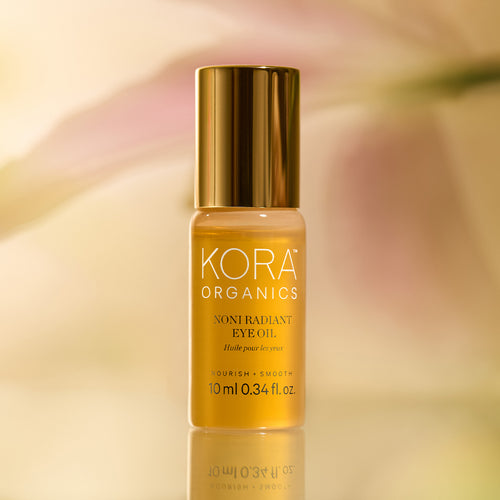
The Noni Radiant Eye Oil ($$46.00) is built around certified organic noni, a fruit extract with a well-documented antioxidant profile and a long history of use in traditional wellness practices across the Pacific. In skin terms, noni's iridoid compounds help neutralize free radical damage, which is one of the contributors to uneven pigmentation and dull skin tone under the eye.
The formula also includes rosehip oil, which brings natural beta-carotene and essential fatty acids to the equation. The fatty acids matter because they reinforce the skin's lipid barrier, making the skin less translucent over time. That directly addresses the vascular visibility component of dark circles. Rosehip's carotenoids also contribute to brightening, working on pigmentation from a different angle than traditional vitamin C derivatives.
What makes this an oil rather than a cream is a deliberate formulation choice, not a trend. Oil molecules are inherently compatible with the skin's natural lipid structure, which means they absorb without sitting on the surface or requiring heavy emulsifiers. For skin as delicate as the under-eye area, that compatibility reduces the risk of congestion or sensitivity while maximizing delivery of the actives inside.
It works well pressed gently into the orbital bone area morning and evening. On a travel day when skin is dehydrated from recycled cabin air, or on a Monday morning after a short weekend, this is the kind of product that visibly changes how tired the eye area looks within minutes of application. The brightening effect is not dramatic overnight, but the cumulative result of consistent use is measurably different skin.
The Supporting Role of a Good Serum

Dark circles caused by skin thinning respond well to ingredients that support cellular renewal and collagen synthesis. The Plant Stem Cell Retinol Alternative Serum ($$80.00) combines bakuchiol and alfalfa stem cells to stimulate skin renewal without the irritation that makes conventional retinol off-limits for the eye area for many people.
Bakuchiol has been studied for its ability to upregulate collagen production and improve skin firmness. Thicker, more resilient skin under the eye is less translucent, which reduces the appearance of vascular darkness. Applied to the face as part of an evening routine, this serum supports the structural changes that make a brightening eye product more effective over time. The two products work on complementary pathways rather than overlapping ones.
For anyone who wants both in one purchase, The Anti-Aging Duo ($$129.00) bundles the serum with a complementary product at a better price point than buying separately.
The Cleanse That Sets Everything Up

Actives only work on clean skin. If residual makeup, SPF, or pollution sits on the skin around the eye when you apply your eye oil, you're reducing its ability to penetrate and work. The Milky Mushroom Gentle Cleansing Oil ($$48.00) dissolves makeup and impurities without stripping the barrier, which matters especially around the eye where aggressive cleansing can cause micro-inflammation that worsens dark circles over time.
Silver ear mushroom, the hero ingredient here, is known for its exceptional water-retention capacity. It helps maintain hydration in the skin during the cleansing step rather than compromising it, which is the opposite of what most surfactant-heavy cleansers do.
What Consistent Use Actually Looks Like
The honest answer to "how long until I see results" is: it depends on the cause. Pigmentation-based darkness responds more slowly, often over six to eight weeks of consistent use. Vascular and dehydration-based darkness can look better within days of improved hydration and circulation support.
What does not work is sporadic use of a good product. The under-eye area responds to routine. An eye oil applied every morning and evening, following a clean and hydrated base, will outperform any single-use treatment or occasional application.
The Noni Radiant Eye Oil is the most direct answer to the original question. It addresses multiple causes of dark circles through a formula that is gentle enough for daily use on the most sensitive skin on the face, and it does so without synthetic fragrance, harsh actives, or ingredients that compromise the barrier it needs to strengthen. That combination is rarer than it should be.