




(0) Items
The Real Reason Your Brightening Serum Isn't Working (And What to Look for Instead)
Posted by KORA Organics in The-organic-editVitamin C is one of the most searched skincare ingredients on the planet. And yet, most people using a vitamin C serum right now are not getting the results they expect. The serum sits in the routine, the bottle empties, and the skin looks more or less the same.
The problem is rarely the ingredient. It's the form, the source, and the surrounding routine.
Here's what actually separates a brightening serum that works from one that looks good on a shelf.
Why Vitamin C Source Changes Everything
Not all vitamin C is created equal, and the gap between sources is significant.
Most vitamin C serums on the market use L-ascorbic acid, a synthetic form that's highly effective in theory but notoriously unstable. It oxidizes quickly on contact with air and light, which is why so many vitamin C serums turn yellow or orange in the bottle. Once oxidized, the active is largely degraded. You're applying something that has already broken down.
The shift happening in the clean beauty market right now is toward plant-derived, naturally stabilized vitamin C sources. Kakadu plum is at the center of that shift. Because it's extracted from a whole botanical source, it comes packaged with cofactors and antioxidants that support stability and absorption in ways isolated ascorbic acid cannot replicate.
This isn't a marketing claim. It's why formulators who work with high-performance clean ingredients have moved toward it.
What a Well-Built Vitamin C Serum Actually Does
Brightening is the headline benefit, but the mechanism is worth understanding.
Vitamin C inhibits melanin synthesis. Melanin is the pigment responsible for dark spots, post-inflammatory hyperpigmentation, and uneven tone. By interrupting the enzymatic process that produces melanin, vitamin C gradually reduces existing discoloration and prevents new spots from forming with continued use.
It also stimulates collagen synthesis. This is why strong vitamin C serums have a dual effect on skin appearance: they brighten tone and improve texture simultaneously.
The third function is antioxidant protection. Environmental stressors, UV exposure, and pollution generate free radicals that degrade collagen and accelerate visible aging. Vitamin C neutralizes those free radicals before they cause structural damage. This is why morning application matters. You want the antioxidant protection active during the hours when your skin is actually exposed.
The Serum Worth Knowing

The Kakadu Plum Vitamin C Serum from KORA Organics ($79.00) is built around this exact principle. Rather than relying on synthetic ascorbic acid, it uses kakadu plum extract as its primary vitamin C source, supported by a certified organic formulation that is vegan, cruelty-free, and non-GMO.
The texture is lightweight and absorbs cleanly, which matters for layering. A vitamin C serum that pills under moisturizer or leaves a tacky film will get skipped, and consistency is what produces visible results with any brightening active.
Apply it in the morning after cleansing, before moisturizer. Give it 60 seconds to absorb before layering anything on top.
Don't Stop at the Face
The skin around the eyes ages faster than anywhere else on the face. The dermis there is significantly thinner, collagen turnover is slower, and the area is in near-constant motion. It's also where brightening often matters most, because darkness and discoloration under the eye reads as fatigue regardless of how healthy the rest of the skin looks.

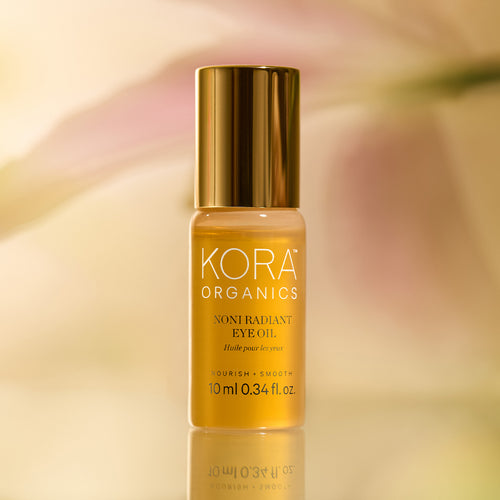
The Kakadu Plum Vitamin C Eye Cream ($64.00) pairs with the serum to extend brightening benefits into the periorbital zone. It uses the same kakadu plum base but is formulated specifically for the delicate eye area, with a richer texture that supports the thinner skin there without causing milia or congestion.
Used together, the serum and eye cream create a consistent brightening approach across the full face rather than treating one zone while neglecting another.
The Step That Determines Whether Any of This Works
A brightening serum applied over a dull, congested surface cannot perform at its best. The skin has to be clean and clear for actives to absorb properly.
This is where cleansing becomes a strategic decision, not just a hygiene step.

The Turmeric Glow Foaming Cleanser ($48.00) primes the skin before the serum step. Turmeric contains curcumin, a compound with documented anti-inflammatory and brightening properties. Used as a daily cleanser, it contributes to tone-evening over time while clearing the surface so the vitamin C serum that follows can actually penetrate.
It's a small sequencing shift that meaningfully improves results without adding complexity to the routine.
When You Want to Go Further
For anyone dealing with visible signs of aging alongside uneven tone, vitamin C alone may not be enough. The current consumer trend toward ingredient pairing reflects this. People are increasingly moving away from single-hero-ingredient routines and toward complementary formulas that address multiple concerns simultaneously.

The Anti-Aging Duo ($129.00) pairs a retinol-alternative approach with the broader KORA Organics philosophy of high-performance clean formulation. Bakuchiol, the plant-derived retinol alternative at the core of this system, supports collagen production and cell turnover without the irritation associated with traditional retinol. Used in the evening alongside a morning vitamin C routine, it addresses the structural side of aging while the vitamin C handles tone and antioxidant protection during the day.
Morning vitamin C, evening bakuchiol.
What to Actually Expect
Vitamin C results are not immediate. Most people see a meaningful shift in skin tone and brightness between four and eight weeks of consistent daily use. The timeline depends on skin type, starting point, and whether the surrounding routine supports absorption.
The variables that matter most are source quality, formulation stability, application consistency, and SPF use afterward. Vitamin C increases photosensitivity slightly, which means sunscreen is non-negotiable if brightening is the goal. Without it, the same UV exposure that the serum is working to counteract will continue to drive pigmentation.
Get those four variables right, and vitamin C delivers on its reputation.