




(0) Items
The Philosophy Behind the Formula: How KORA Organics Builds Skincare Around Belief
Posted by KORA Organics in The-organic-editThere is a version of clean beauty that is mostly aesthetic — soft packaging, botanical names on the label, a general suggestion of wellness. And then there is what KORA Organics is actually doing, which is something more deliberate. Founded by Miranda Kerr, the brand was built on a conviction that skincare should work the way nature already knows how to work: intelligently, gently, and without shortcuts that cost the skin later.
That conviction is not a tagline. It shows up in specific formulation decisions, in the sourcing of ingredients that most brands would consider too expensive or too complicated to work with, and in a refusal to treat "organic" as a marketing category rather than a technical standard. Understanding what KORA stands for means looking closely at what it actually puts in its products — and why those choices matter.
Rethinking What "Active" Means
The most revealing place to look is how KORA approaches the anti-aging category, because that is where the industry's shortcuts are most visible.
Traditional retinol works by forcing rapid cellular turnover. It is effective, but the mechanism is inherently aggressive — the skin purges, peels, and becomes photosensitive because it is essentially being stressed into renewal. For a brand committed to organic and genuinely skin-supportive formulations, that approach is a philosophical mismatch.

The Plant Stem Cell Retinol Alternative Moisturizer ($$72.00) takes a different path. Plant stem cell technology works by signaling the skin's own regenerative processes rather than overriding them. The key distinction is biological communication versus biological force. When skin cells receive signals that mimic their natural repair cues, they respond without the inflammatory cascade that retinol triggers. The result is renewal that the skin participates in, rather than renewal that happens to it. For anyone who has abandoned retinol because of sensitivity, redness, or the weeks-long adjustment period, this is not a compromise — it is a more sophisticated approach to the same outcome.
The Eye Area as a Test of Ingredient Integrity
The skin around the eyes is where formulation philosophy gets tested most honestly. It is the thinnest skin on the face, the most reactive, and the least forgiving of ingredients that rely on irritation to produce results. What a brand chooses to put in its eye products says a great deal about what it actually believes.
KORA offers two distinct eye treatments, and the difference between them is worth understanding clearly.

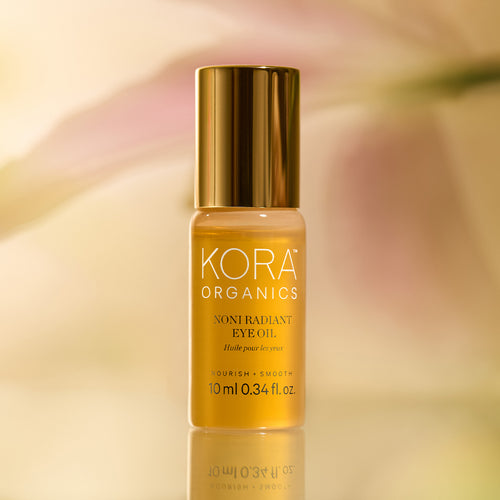
The Noni Radiant Eye Oil ($$46.00) is built around noni fruit extract, rosehip, and a blend of lightweight botanical oils. Noni is rich in iridoids, a class of compounds with documented antioxidant and anti-inflammatory properties. The oil format is intentional: lipid-based delivery systems penetrate the lipid-rich skin barrier more efficiently than water-based formulas, which means the active compounds reach the dermis rather than sitting on the surface. This product is best suited to those whose primary concern is dehydration, loss of elasticity, and the kind of fine lines that come from dryness rather than deep structural aging. It is also the right choice for anyone who prefers a more minimalist, sensory-forward ritual — the texture is genuinely pleasant to use.

The Kakadu Plum Vitamin C Eye Cream ($$64.00) addresses a different set of concerns. Kakadu plum is one of the most concentrated natural sources of vitamin C on earth — significantly higher in ascorbic acid content than most other botanical sources. Vitamin C in this concentration works on two fronts: it inhibits melanin synthesis (which addresses pigmentation and dark circles caused by post-inflammatory discoloration) and it stimulates collagen production by activating the enzymes responsible for collagen cross-linking. The cream format provides more occlusive coverage than the oil, making it the stronger choice for targeting visible dark circles, uneven tone around the eye, and the early signs of structural volume loss. If brightening is the priority, this is the product to reach for.
The honest comparison: choose the Noni Eye Oil if your concern is dryness, puffiness, and maintaining suppleness. Choose the Kakadu Plum Eye Cream if you are targeting pigmentation, dark circles, or want the collagen-support benefit of a clinically recognized active.
Hydration as a Treatment, Not a Step

The Milky Mushroom Ultra-Hydrating Mask ($$56.00) illustrates another consistent principle in KORA's formulation approach: using ingredients that work with the skin's existing biology rather than supplementing it with synthetic substitutes.
Silver ear mushroom, the hero ingredient here, produces a polysaccharide that functions similarly to hyaluronic acid in its ability to attract and retain water — but with a molecular structure that allows it to form a more flexible film on the skin's surface. This matters because film-forming hydrators that are too occlusive can interfere with the skin's natural transepidermal processes. The mushroom-derived polysaccharide hydrates without blocking, which means the skin stays comfortable and supple without the congestion that heavier synthetic hydrators can cause. Used as a treatment mask, it delivers a concentrated dose of this compound over an extended contact time, allowing deeper penetration than a standard moisturizer application would achieve.
The Values That Extend Beyond the Jar

The Love Your Mother Earth Tote ($$17.50) is a small thing, and it is worth mentioning precisely because it is small. A brand that cares about environmental impact does not only express that care in its formulations — it expresses it in the peripheral choices, the ones that do not directly affect the product's efficacy or the brand's bottom line. Carrying that message into an everyday object is a straightforward declaration of consistency.
What Consistency Actually Looks Like
The through-line across everything KORA makes is a refusal to separate efficacy from ethics. The plant stem cell moisturizer works because it understands cellular biology. The eye treatments work because the ingredients are matched to specific mechanisms. The hydrating mask works because the star ingredient is genuinely suited to the task. None of these products are relying on the word "organic" to do the heavy lifting.
That is the real story of KORA Organics: not that it is clean instead of effective, but that it treats those two things as inseparable. The belief is built into the formula. Every product is the evidence.