




(0) Items
The Eye Cream Question Everyone Asks (And the Honest Answer)
Posted by KORA Organics in The-organic-editDark circles are one of the most searched skincare concerns on the internet, and the advice is often the same: get more sleep, drink more water, use caffeine. That advice is not wrong, but it is incomplete. If you have been doing all of those things and still reaching for concealer every morning, the issue is likely more complex than hydration.
Here is what dermatologists and cosmetic chemists consistently point out: dark circles have more than one cause. Some are vascular, meaning blood pooling beneath thin under-eye skin creates a bluish or purple cast. Some are pigmentation-related, caused by excess melanin from sun exposure, genetics, or post-inflammatory changes. And some are structural, where hollowness under the eye creates a shadow effect that no topical product can fully address. Understanding which type you are dealing with determines which ingredients will actually help.
Why Most Eye Creams Underdeliver
The under-eye area is the thinnest skin on the face. It has fewer oil glands, less structural support, and absorbs ingredients differently than the rest of the skin. Many eye creams are formulated primarily for puffiness or fine lines, with brightening as an afterthought. They may contain caffeine to temporarily constrict blood vessels, but without ingredients that address pigmentation or skin renewal, the results stay superficial.
The other issue is texture. Heavy creams can sit on top of skin rather than penetrating it. For brightening specifically, delivery matters. Lightweight, oil-based formats often outperform dense creams because they absorb more readily into thin skin and carry actives more efficiently.
What Brightening Ingredients Actually Do
For vascular dark circles, ingredients that support circulation and strengthen capillary walls are most useful. For pigmentation-based darkness, you need something that interrupts melanin production or accelerates cell turnover. For dullness and uneven tone, antioxidants and skin-renewing botanicals do the heavy lifting.
Noni fruit is one of the more compelling examples of a multi-functional brightening ingredient. Research on Morinda citrifolia, the plant noni comes from, shows antioxidant activity and compounds that support skin luminosity. It is not a flashy marketing ingredient. It is a well-studied botanical with a legitimate track record in traditional wellness practices, now backed by modern formulation research.
Rosehip is another. Rich in naturally occurring trans-retinoic acid and vitamin C precursors, rosehip oil supports skin renewal and helps fade hyperpigmentation over time. Dermatologists frequently recommend it as a gentler alternative for sensitive skin that cannot tolerate synthetic retinoids around the eye area.
The KORA Organics Approach to the Under-Eye Area

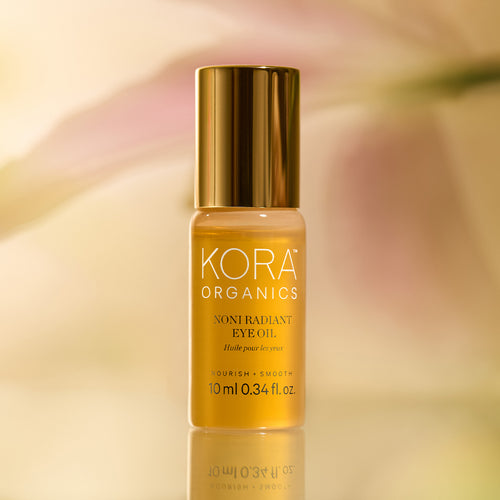
The Noni Radiant Eye Oil ($46) is built around exactly this logic. Rather than a thick cream that sits on the surface, it uses a lightweight oil format to deliver certified organic noni and rosehip directly into the under-eye area. The formulation targets both brightness and hydration, addressing the dullness and dehydration that make dark circles appear more pronounced.
It is also certified organic, vegan, and cruelty-free, which matters for this particular zone of the face. The under-eye skin is thin and absorbs readily, so the quality and purity of ingredients are more consequential here than almost anywhere else.
The oil texture is worth noting. Some people hesitate at the idea of an eye oil, but for dark circles specifically, oils are often the right call. They do not require the emulsifying agents and preservatives that creams do, which means fewer potential irritants on already-sensitive skin.
Building a Routine That Supports Eye Brightening
The eye area does not exist in isolation. What you apply to the rest of your face affects how the under-eye zone looks and performs. If your overall skin is dull, dehydrated, or showing signs of uneven tone, no eye product will compensate for that.

The Plant Stem Cell Retinol Alternative Serum ($80) addresses the broader renewal picture. Formulated with bakuchiol and alfalfa as a retinol alternative, it supports cell turnover and smooths fine lines without the irritation that traditional retinoids cause. Skin that renews more efficiently looks more radiant overall, and that effect extends to the under-eye area. In consumer studies, 80% of users described it as more effective than traditional retinol products they had used previously.
For those who want to start with both the serum and a supporting product, The Anti-Aging Duo ($58) offers a practical entry point.

Cleansing also plays a role. Residual makeup and sunscreen around the eye area can contribute to irritation and dullness if not fully removed. The Milky Mushroom Gentle Cleansing Oil ($15) dissolves eye makeup and impurities without pulling at the skin. Silver ear mushroom, its key ingredient, is well-regarded in cosmetic science for its water-retention properties, making it a smart choice for the delicate eye zone. In consumer testing, 100% of users found it removed impurities without irritation.
What to Realistically Expect
Brightening dark circles takes time. Most dermatologists suggest giving any new eye treatment at least six to eight weeks before evaluating results, because skin renewal cycles run on that timeline. Products that claim to eliminate dark circles overnight are overpromising.
What a well-formulated eye oil can do is visibly reduce the appearance of darkness by improving hydration, supporting cell turnover, and delivering antioxidants that address pigmentation over time. Skin that is better nourished and more efficiently renewed reflects light differently. That is not a minor result.
The combination of a targeted eye oil, a renewal-focused face serum, and a gentle cleanser that does not compromise the skin barrier is a more complete strategy than any single product used in isolation.
Dark circles rarely have one cause. The best approach acknowledges that and addresses multiple contributing factors simultaneously. That is what a considered routine, built around high-quality certified organic ingredients, actually delivers.