




(0) Items
Five Products. One Skin Goal. Here's How They Work Together.
Posted by KORA Organics in The-organic-editThere's a shift happening in how people approach skincare routines. The maximalist era of 12-step regimens and novelty ingredient chasing is giving way to something more deliberate: fewer products, better formulas, and a clearer understanding of what each step is actually doing. Searches for "skincare routine simplification" have climbed steadily, and dermatologist surveys consistently show that over-layering remains one of the most common causes of sensitization and barrier disruption.
The response from serious skincare brands hasn't been to launch fewer products. It's been to make each product do more, and to make the products work as a cohesive system rather than a collection of unrelated items.
KORA Organics has built exactly that. The five products below aren't just individually strong. They address five of the most persistent skin concerns people bring to their routines, and they're designed to layer without conflict. Here's what each one solves, and why it belongs in a thoughtful regimen.
When Retinol Keeps Letting You Down
The anti-aging category is experiencing a meaningful correction. For years, conventional retinol was treated as the non-negotiable gold standard for fine lines and texture. But clinical data now shows that roughly 30% of retinol users experience enough irritation, peeling, or barrier disruption to discontinue use. That number climbs among people with sensitive or rosacea-prone skin.
The demand for plant-based retinol alternatives has grown sharply as a result, with bakuchiol leading the category. KORA Organics' Plant Stem Cell Retinol Alternative Serum ($80) pairs bakuchiol with alfalfa stem cell extract to target fine lines, uneven texture, and loss of firmness without the inflammation cycle that sidelines so many retinol users.
In independent consumer studies, 80% of users described this serum as more effective than traditional retinol products they had previously used. That's not a minor finding. It reflects a formulation philosophy that prioritizes skin tolerance alongside results, the understanding that a product you can actually use every night will outperform a stronger product you use twice a week because anything more causes a reaction.
The Hydration Problem Nobody Talks About Honestly
Most people who think they have dry skin actually have dehydrated skin, a different problem with a different solution. Dry skin lacks oil. Dehydrated skin lacks water, and it can occur on oily, combination, or sensitive skin types alike. Layering a rich cream on dehydrated skin addresses the symptom without touching the cause.
The Active Algae Lightweight Moisturizer ($48) is built for this. Microalgae is a genuine functional ingredient here, not a marketing flourish. Algae-derived compounds are among the most effective humectants in clean formulation, drawing moisture into the skin and supporting the barrier's ability to retain it. The lightweight texture means it absorbs without the occlusive heaviness that can clog pores or interfere with other actives in a routine.
For anyone who has cycled through heavy creams that feel luxurious but leave skin looking flat by midday, this is the recalibration point.
The Eye Area Deserves a Real Answer
The skin around the eyes is thinner than anywhere else on the face and has fewer sebaceous glands to support its own moisture barrier. It shows fatigue, dehydration, and UV damage earlier and more visibly than surrounding areas. Despite this, many people either skip eye cream entirely or use their regular moisturizer in the zone, neither approach is optimal.
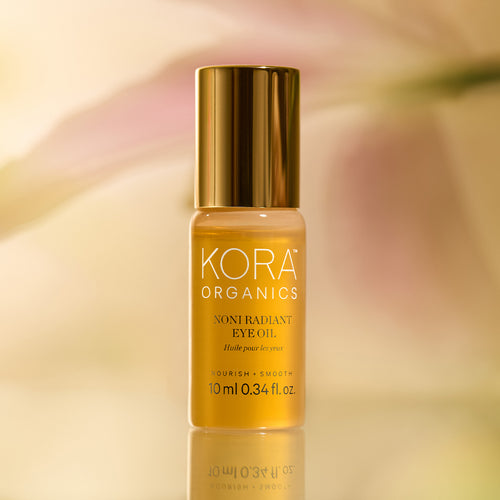
The Kakadu Plum Vitamin C Eye Cream ($64) addresses the two issues that matter most around the eyes: discoloration and loss of firmness. Kakadu plum is the highest natural source of vitamin C known, with concentrations that significantly exceed synthetic ascorbic acid alternatives on a bioavailability basis. Vitamin C in this context works to inhibit melanin production, which reduces the appearance of dark circles caused by pigmentation, while also stimulating collagen synthesis to support the structural integrity of the periorbital area.
The formulation is calibrated for the delicacy of the eye zone, effective enough to produce visible results and gentle enough not to cause the stinging or sensitivity that synthetic vitamin C serums frequently trigger in this area.
Dullness Is a Circulation and Oxidation Problem
Skin that looks dull, flat, or tired is almost always dealing with one of two things: a buildup of dead cells on the surface, or a deficit of antioxidant protection that allows oxidative stress to mute radiance. The brightening trend in skincare has been one of the most sustained category movements of the past several years, driven by consumer awareness that uneven tone and lack of luminosity are addressable, not inevitable.
The Turmeric Glow Moisturizer ($68) brings together organic turmeric and licorice root to tackle both sides of this problem. Turmeric's active compound, curcumin, is a well-documented anti-inflammatory and antioxidant agent that works to neutralize free radical damage and visibly even skin tone over time. Licorice root extract inhibits tyrosinase, the enzyme responsible for excess melanin production, addressing hyperpigmentation at the source rather than just masking it.
This is a moisturizer that earns the word "glow", not through shimmer or optical diffusers, but through ingredients that actually change the skin's behavior.
Finishing a Routine Properly
Face oils have moved from niche to mainstream for a reason that goes beyond trend. The clean beauty movement brought renewed attention to lipid-based ingredients, and the science behind them is solid: plant oils rich in essential fatty acids help reinforce the skin barrier, reduce transepidermal water loss, and deliver fat-soluble antioxidants directly to the skin.
The Noni Glow Face Oil ($78) uses noni fruit extract alongside rosehip and a blend of certified organic botanical oils to seal in the hydration and active benefits of everything applied before it. Noni is rich in iridoids, compounds with documented anti-inflammatory and antioxidant properties that support skin recovery and resilience. Rosehip contributes naturally occurring trans-retinoic acid and linoleic acid, which together support cell turnover and barrier repair.
Applied as the final step in an evening routine, this oil locks in the work of every product underneath it. A few drops pressed into the skin after moisturizer is enough.
Why the System Matters
The case for buying any one of these products is strong on its own. The case for building a routine around them is stronger. Each product in this lineup targets a distinct problem, retinol sensitivity, chronic dehydration, periorbital aging, oxidative dullness, and barrier compromise, and none of them compete with each other. They layer cleanly, they share a commitment to certified organic, vegan, and non-GMO formulation, and they reflect a brand that has chosen to solve real problems rather than follow category trends for their own sake.
That's the kind of routine worth building.