




(0) Items
Most skincare routines are assembled by accident. A cleanser picked up because of a sale, a serum recommended by a friend, a moisturizer grabbed because the packaging looked right. The result is a shelf full of products that don't communicate with each other, and skin that reflects that confusion.
KORA Organics takes a different position. Every formula in the line is built around certified organic ingredients with a specific, demonstrable function. When you understand what each product is actually doing at the skin level, the logic of combining them becomes obvious. This is a closer look at five of those products and the science that makes them worth the investment.
What Your Cleanser Is Actually Doing to Your Barrier
Cleansing is the step most people underestimate. Strip the skin too aggressively and every product applied afterward has to work against a compromised barrier rather than with healthy skin. This is why the format and ingredient composition of a cleanser matter as much as anything else in a routine.

The Milky Mushroom Gentle Cleansing Oil — $48 — operates on a straightforward chemical principle: like dissolves like. Oil-based formulas lift oil-soluble debris, including SPF, sebum, and long-wear makeup, without requiring the aggressive surfactants that cause post-cleanse tightness. The silver ear mushroom extract in this formula is the detail worth paying attention to. This ingredient has a documented capacity to form a moisture-retaining film on the skin surface, similar in function to hyaluronic acid but with a distinct polysaccharide structure that holds water more effectively under low-humidity conditions. In consumer testing, 100% of participants reported that the cleanser removed impurities without causing irritation, which is a notable result for a first-cleanse product.

The Turmeric Glow Foaming Cleanser — $48 — is the second-cleanse option, designed to work after the oil has lifted the bulk of surface debris. Foam cleansers have a reputation for being drying, and that reputation is often earned. The difference here is the inclusion of organic turmeric, which brings curcumin into direct contact with the skin during the cleansing step. Curcumin has been studied for its anti-inflammatory properties, and applying it during cleansing means the skin receives that benefit before any other product is layered on. Used together, these two cleansers address both the mechanical and biochemical aspects of a thorough, non-stripping cleanse.
The Eye Area Deserves a Purpose-Built Formula
The skin around the eye is structurally different from the rest of the face. It is thinner, has fewer sebaceous glands, and experiences more mechanical stress from blinking and expression. Applying a standard moisturizer to this area is not wrong, but it is imprecise.

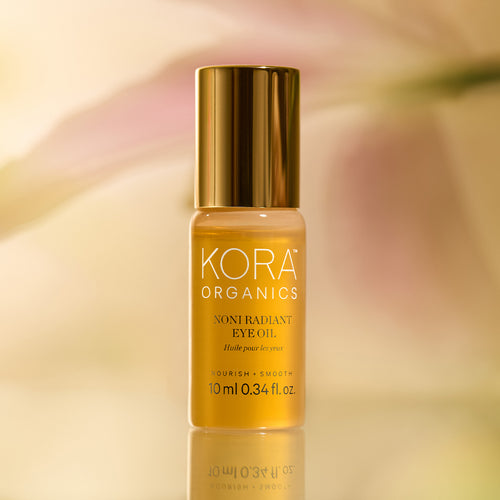
The Noni Radiant Eye Oil — $46 — is formulated specifically for this zone. Noni, derived from Morinda citrifolia, contains iridoids, which are compounds with antioxidant and anti-inflammatory activity. Research published in peer-reviewed botanical science literature has identified noni extract as a meaningful source of these bioactives, which are relevant to reducing the appearance of puffiness and oxidative stress-related discoloration. An oil format makes sense here because the lipid-rich composition mirrors the skin's own natural emollients, allowing for absorption without the occlusive weight that can cause milia in this delicate area. This is a product where the format is not an aesthetic choice. It is a functional one.
Rethinking Anti-Aging From the Ground Up
Traditional retinol works. The research supporting it is extensive. But the irritation profile, the photosensitivity, and the weeks of adjustment that often accompany it are real barriers for a significant portion of people who try it. The question worth asking is not whether retinol is effective, but whether the mechanism it uses is the only viable path to the same outcome.

The Plant Stem Cell Retinol Alternative Serum — $80 — combines bakuchiol and alfalfa to address fine lines and skin texture through a different pathway. Bakuchiol has been the subject of clinical comparison with retinol, most notably a 2018 double-blind study published in the British Journal of Dermatology, which found that bakuchiol produced comparable improvements in fine lines and pigmentation to retinol without the associated side effects. Alfalfa contributes plant stem cell activity, supporting the skin's own regenerative processes rather than forcing cellular turnover through a vitamin A mechanism. In consumer testing, 80% of participants described this serum as more effective than traditional retinol products they had previously used.

The Plant Stem Cell Retinol Alternative Moisturizer — $72 — extends this logic into the moisturizing step. Using the serum alone leaves the active ingredients without an occlusive layer to seal in the work. This moisturizer is designed to function as that layer while continuing to deliver the same plant stem cell and bakuchiol complex. The pairing is not redundant. The serum penetrates; the moisturizer protects and reinforces.
How These Five Products Fit Together
| Product | Category | Price | Primary Function |
|---|---|---|---|
| Milky Mushroom Gentle Cleansing Oil | Cleanser | $48 | First cleanse, makeup and SPF removal |
| Turmeric Glow Foaming Cleanser | Cleanser | $48 | Second cleanse, anti-inflammatory support |
| Noni Radiant Eye Oil | Moisturizer | $46 | Eye area hydration and antioxidant delivery |
| Plant Stem Cell Retinol Alternative Serum | Treatment | $80 | Targeted anti-aging, fine line reduction |
| Plant Stem Cell Retinol Alternative Moisturizer | Moisturizer | $72 | Sealing, reinforcing, and ongoing plant stem cell activity |
Each product has a defined role. None of them overlap in a way that creates redundancy, and each one addresses a stage in the routine where the wrong product choice creates a measurable problem. The cleansers protect the barrier. The eye oil targets a zone most formulas ignore properly. The serum and moisturizer work as a system rather than two isolated steps.
KORA Organics' certified organic standards mean these formulas also carry up to 60% more antioxidants than non-organic equivalents, which is a structural advantage that compounds across every step of the routine.