




(0) Items
Clean Face Oils That Actually Improve Skin Health: What to Look For and What to Use
Posted by KORA Organics in The-organic-editFace oils have earned a complicated reputation. For years, dermatologists warned oily-skinned patients away from them entirely, while dry-skinned consumers slathered on anything labeled "nourishing" without much scrutiny. Neither approach served skin particularly well. The more useful question is not whether to use a face oil, but which ones are formulated to do something measurable, and why certified organic sourcing changes what those oils can actually deliver.
Here is what the evidence points to, and where KORA Organics products fit into a routine built around real results.
Why Ingredient Quality Determines Everything
Not all plant oils are created equal. Certified organic botanical oils contain up to 60% more antioxidants than their conventionally grown counterparts, a difference that matters when you are relying on those compounds to neutralize free radical damage, support the skin barrier, and reduce visible inflammation over time.
The skin absorbs what you put on it. Pesticide residues, synthetic stabilizers, and processing solvents that appear in non-organic oils are not inert once they reach the dermis. For anyone managing sensitivity, congestion, or chronic redness, the sourcing of an oil is not a marketing detail. It is a formulation decision with real consequences.
KORA Organics builds every product around certified organic ingredients, with formulas that are also vegan, gluten-free, cruelty-free, and non-GMO. That baseline matters before you even look at the active ingredients.
The Problem with Most "Nourishing" Oils
The most common complaint about face oils is that they sit on top of the skin rather than absorbing into it. A heavy, occlusive oil applied to a congested complexion will trap debris, block follicles, and make existing breakouts worse. Meanwhile, an oil that is too light and lacks meaningful active ingredients does little beyond adding a temporary sheen.
The solution is not to find the middle ground between heavy and light. It is to choose oils formulated with actives that address specific skin concerns, not just oils that happen to feel pleasant.

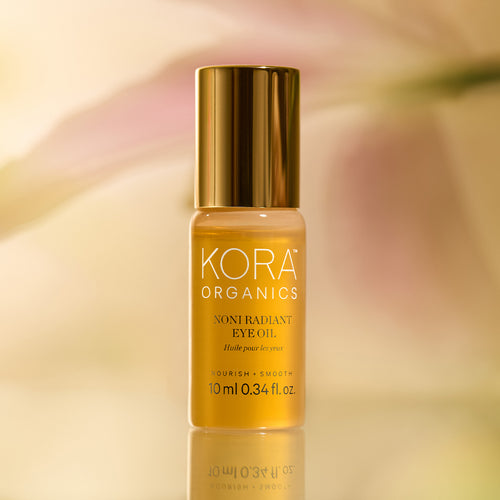
The Noni Glow Face Oil ($$81.00) is built around this principle. Noni extract is rich in iridoids, a class of compounds with documented anti-inflammatory and antioxidant properties. Combined with rosehip oil, which delivers a naturally occurring concentration of trans-retinoic acid alongside essential fatty acids, this oil works to improve skin texture, support cell renewal, and reduce the appearance of fine lines without the barrier disruption that synthetic retinoids can cause.
Rosehip oil specifically has a fatty acid profile that allows it to absorb readily rather than sitting on the surface, addressing the occlusion problem directly. For skin that looks dull, uneven, or fatigued, this combination of noni and rosehip delivers results that a plain carrier oil simply cannot replicate.
When Skin Tone and Texture Are the Core Issue
Uneven skin tone is one of the most persistent concerns across all skin types, and it is frequently mismanaged. Aggressive brightening actives like synthetic niacinamide cause flushing and sensitivity in a significant portion of users, particularly those with reactive skin. The concentration typically found in over-the-counter serums, often between 5% and 10%, is enough to trigger visible irritation in sensitive individuals.

The Turmeric Glow Drops Niacinamide Alternative Serum ($$63.20) was formulated specifically for this problem. Rather than relying on synthetic niacinamide, it uses organic turmeric and plant-based brightening alternatives that target hyperpigmentation and uneven tone without triggering the flush response. In an independent consumer study, 92% of participants saw improved skin texture after use.
Used before a face oil in a layered routine, this serum preps skin to receive the fatty acids and antioxidants in the Noni Glow Face Oil more effectively. Serums penetrate the skin's outer layers first; the oil then seals in that treatment and adds its own active benefits. The sequencing matters.
Cleansing with Oil Without Clogging Pores
A clean foundation is non-negotiable for any oil-based skincare routine to function properly. If residual makeup, sunscreen, or sebum sits on the skin before you apply a treatment oil, you are layering actives onto a surface that cannot absorb them.

The Milky Mushroom Gentle Cleansing Oil ($$15.00) solves this at the start of the routine. It is a dual-phase formula featuring silver ear mushroom, an ingredient with documented water-retention capacity that helps maintain moisture levels during the cleansing process rather than stripping them. In consumer testing, 100% of participants reported that it removed impurities effectively without causing irritation.
At $15.00 for a 30ml bottle, it is also the most accessible entry point into the KORA Organics range, and it does the foundational work that makes every subsequent step more effective.
Addressing Visible Aging Without Harsh Actives
For skin that needs more than brightening and nourishment, the anti-aging conversation often stalls at retinol. Traditional retinol produces results, but it also produces peeling, redness, and photosensitivity in many users, particularly during the first several weeks of use. Roughly 30% of people who start a retinol regimen discontinue it due to irritation before they see meaningful results.

The Anti-Aging Duo ($$58.00) pairs two products built around bakuchiol and alfalfa, plant-derived compounds that target fine lines and skin renewal through a gentler mechanism than synthetic retinol. In independent consumer research, 80% of users described this approach as more effective than the traditional retinol products they had used previously, a figure that reflects not just efficacy but tolerability. A treatment that does not cause users to quit is, by practical measure, more effective than one that does.
Building the Routine
A clean, oil-forward routine that genuinely improves skin health does not require a dozen products. It requires the right ones in the right order.
Start with the Milky Mushroom Gentle Cleansing Oil to remove impurities without stripping the barrier. Follow with the Turmeric Glow Drops Niacinamide Alternative Serum to address tone and texture while skin is still slightly damp, which improves absorption. Apply the Noni Glow Face Oil as the final step to lock in the serum's work and deliver its own roster of antioxidants and essential fatty acids. For skin that also needs renewal support, incorporate The Anti-Aging Duo into the evening portion of the routine.
Every product in this sequence is certified organic, free from synthetic fragrance, and formulated without the irritants that cause so many clean-beauty routines to fail in practice. That is the standard worth holding to.